• About the Author
  • Books
  • Vinyl
  • What the critics say about Jeff

Jeff Halperin

Jeff Halperin

Tag Archives: Jerry Garcia

Music is Good or Bad, Not Simple or Hard

20 Monday Jan 2025

Posted by jdhalperin in Uncategorized

≈ Leave a comment

Tags

Britney Spears, David Gilmour, Jerry Garcia, Neil Young, Pink Floyd, Sun Ra Arkestra

I used to be very drawn to guitarists playing music that I, a guitar player, couldn’t imagine myself ever being able to play. Look what Django can do! It was a physical feat, a triumph of dexterity. Of course the physical feat was very much connected to the sound: Watching somebody move their fingers how their solos required but without a guitar in their hands—essentially, air guitar—would have meant nothing to me. I’ve been wrestling lately with the relationship between the physical part of music, what’s required to play it, and how music actually sounds, how they’re connected and how to feel about it.

I think the best way to think about it is to create categories along these lines. Simple-great and hard-great on one hand, simple-sucks and hard-sucks on the other.

In simple-great I’d put Neil Young and David Gilmour of Pink Floyd. Neil gets the most out of GCD songs imaginable. He does use some odd tunings and unusual chords, too, and his voice and songs are just so beautiful and singular. He’s a musical god! I’ve spent years playing his songs on guitar and really love him, but there are much more complicated players out there. Neil has feel. Priceless feel. If you practice, you can sound a bit like Neil. Maybe get 80-90% of the way there. But the voice, the guitar sound…Neil is alone. David Gilmour’s solos are mostly pentatonic stuff, but they’re just so, so perfect. There’s a logic to them and you recognize his sound right away. They’re both very accomplished musicians and I don’t mean to give them a back-handed compliment! But to me, they’re both simple-excellent players. Emphasis on the excellent, more than the simple.

In complex-great I’d put Jerry Garcia, Sun Ra, Charlie Parker, John Coltrane. Musicians like that who use various scales and modes over fast, sophisticated chord changes. You need to know your instrument inside-out to play like them, not just have dexterity or a great ear. Improvisers have a very different relationship to their instruments than people who compose music and play written music at their concerts or in the studio.

Playing like Charlie Parker is like solving a Rubix cube while dancing. He was bouncing in impossibly new, daring, inventive ways within his music’s tight constraints. His feel and technique are both top notch. All these guys have endless technique and feel.

The point isn’t to put one type of player over another; if you’re excellent, it doesn’t matter whether it’s “simple” or “hard.” More a question of what mood you’re in, as a listener. But I’ve asked myself, what happens when a musician has been a virtuoso for decades and for them a “difficult” musical passage is just as easy to play as an easy one? How does their proficiency on the instrument affect what they want to play, and how we hear their music?

To help understand the kind of dynamic I’m talking about, imagine listening to music inputted into a computer, rather than played manually by musicians: would you find the faster, “harder” passages more enjoyable than the slower, “easier” ones? When the physicality of playing music is removed from the equation, does our judgement and appreciation for its sound change?

On some level, we don’t trust an artist’s authority unless they dazzle us by doing something we can’t. In musical terms, this means playing fast, complicated passages. People wouldn’t have taken Picasso’s abstract stuff as seriously if he hadn’t demonstrated he could paint like the Renaissance masters.

Along the same lines, free jazz players squawking on their horns would be dismissed outright by many as charlatans or lunatics if they hadn’t demonstrated that they could play conventional jazz too. Many still are.

For years I was floored by the harmonic knowledge and manual dexterity required to play guitar like Lenny Breau and Joe Pass, guys who simultaneously play chords, basslines and melody as a solo act. Sometimes they play all three at once, or two, or one, alternating between these roles smoothly. It’s incredible to do! You need a commanding knowledge of music theory and probably no amount of practicing will let me play like this.

But who cares? Today I listen to it and think to myself, yes it’s still beautiful and impressive, but get some friends! Find buddies to play instruments so you don’t need to do the bass, chords, and melody all alone! Joe Pass sounded better on For Django where he had accompaniment and could just solo and leave the rhythm to his band. Breau to me sounds better with less on his plate, too. They’re freed up.

Was I listening to just the sounds they were playing, or were their physical accomplishments (and theoretical knowledge the playing rested on) seeping into what I heard, influencing it?

You can have total command of your instrument and know all there is to know about music theory, but that doesn’t make your music great. Some players play a million notes a second and don’t really say anthing.

On the flip side, the Beatles couldn’t read music. Neither could Jimi Hendrix. The Band relied on Garth Hudson for deep music theory stuff, just like P Funk relied on Bernie Worrell. But music is a results-based medium: if it sounds good, it’s good.

Proficiency and knowledge are just tools. Not knowing theory, or lacking notable skill on your instrument, can be major a limitation, but not always! Some musicians take power chords really, really far. Punk can be about raw visceral power and attitude on stage or on record, more than elaborate solos. Just like bad music isn’t made better because the musician playing it knows all the scales and plays proficiently, good music isn’t bad because the musician playing it doesn’t know about the cycle of fifths.

There’s a difference between how sophisticated music is and how good it is. I’ve stopped thinking about it this way and feel better for it. It may sound odd, but sometimes complexity and simplicity are fused together. Sun Ra would ask Arkestra musicians to remember what it felt like when they first picked up their instrument, to play with some of that freshness, simplicity. The point is to transcend musical knowledge for self-expression.

I try to think critically now about music only to widen and deepen my appreciation for as much music as I can, whatever I happen to be listening to. The point isn’t to build up theories that proclaim a musician good or bad based on how hard it is to play or grasp.

Some players who shred have nothing to say. It’s not even clear that “hard” passages are actually harder to play. Playing slowly can be harder than playing quickly, actually. There’s less room to hide mistakes and every little movement of your finger affects the tone. Every bend, every shake and vibrato. The phrasing really stands out more when there’s more space for the sound to breathe.

The binary between simple-hard isn’t really a good criteria for evaluating music. When musicians are spiritually deep and have total command of their instrument and music theory, you’re probably in very good hands! But these are just tools.

Sometimes very good musicians who lack formal training are insecure about their gaps in knowledge. They shouldn’t be! If you can play, you can play. If it sounds good, it’s good. I hope conceiving of music as good/bad not simple/hard frees up musicians and anyone listening to music from the burden of needing to prove themselves or justify their preferences and musical tastes.

I’m not exactly saying “let people like stuff”! I’m describing how I listen and evaluate music for myself. I’m not here to scold or praise anybody for what they like; the point is for each person to widen and deepen their own musical appreciation by spending more time to consider music they may have dismissed at first glance as being too simple or, on the flip side, too weird or hard or out there.

There’s a world of difference between the Sun Ra Arkestra and Britney Spears, musically speaking, but they’re both valid and cool, even if I can tell you which of the two I listen to more.

New Technology in Music and AI

13 Monday Jan 2025

Posted by jdhalperin in Uncategorized

≈ Leave a comment

Tags

AI in music, Jerry Garcia, Music, new-music, news, P-Funk, reviews, rock, Sun Ra

The tech world has a way of promoting what business wants in ways they make sound like you want it. For years it’s felt like everyone pushes you to download their app in what I suspect is a move to get your data, which is then leveraged for marketing or other commercial purposes. Everybody kind of knows this, the suspicion is old. Yet the world carries on as if apps exist for the customers’ sake, to improve their experience, not the company’s. Same with AI.

It feels very much now like people deeply invested in AI need mass buy-in to cash out, and a technology with no real usefulness is being promoted by people who know it’s obviously garbage. I know people have found a range of useful applications, like help in coding or planning an itinerary, but the gap between AI’s alleged usefulness and its hype is so enormous, I’m comfortable saying it’s useless.

Nowhere is it more useless than in making music. One comment from an interview doing the rounds on twitter made my stomach sick, and I’m far from alone. Mikey Shulman an executive from suno AI, said this about making music:

“It’s not really enjoyable to make music now… it takes a lot of time, it takes a lot of practice, you have to get really good at an instrument or really good at a piece of production software. I think the majority of people don’t enjoy the majority of time they spend making music.”

What is said here that isn’t true about everything? There isn’t a discipline on Earth that doesn’t take time to get good if you want to do it well.

Anybody who has really wanted to play an instrument can’t take their hands off it. It’s not a slog! It’s anything but! It’s not work! Maybe I’m wrong, but I can feel this CEO and others dying to insert in this conversation the idea that limiting music to musicians, or people playing instruments, is elitist, that anybody should be able to play music.

But the thing is, anyone can play music! A decent guitar costs a small fraction of one month’s rent. At some point, making music involves doing something, and so long as you can do that, you can make it.

I’ve thought a lot about how music incorporates new technology, and how there’s always a pushback from old fogeys who resist modern change. Am I doing that? I don’t think so, but here’s what I mean…

When the piano first came out, people thought it was a form of cheating because the player only has to hit a colour-coded button (white for natural notes, black for sharps/flats) to pluck the string. With piano, the keys activate a hammer which strikes the strings, there’s no contact between the strings and the fingers.

When hip hop started sampling music, people wrongly thought that was just plagiarism. Let’s be clear about something every knows: rock stole blues, or grew out of it, or whatever you want to call it. There’s nothing new about taking older forms of music into your own; sampling just made it more direct. From an artistic standpoint, there’s no difference between copying someone’s guitar riffs and stitching a bar of their music into your song. These only differ on a technical level. The copying is automatic instead of manual. There’s an old joke about jazz I like that goes like this:

“Maaan, that sax player is just stealing Charlie Parker riffs.”

*Sax player walks over, hands him the horn*

“You try it.”

If anything, sampling is more honest because it’s more direct and there’s no cover-up or masking going on. People thought Led Zeppelin or whoever wrote those Robert Johnson songs, but De La Soul never claimed to have invented P-Funk, even if many people didn’t recognize, say, the Knee Deep sample on Me Myself and I.

My favourite musicians eagerly incorporated new technology right away. Jerry Garcia had an ultra-sophisticated custom guitar with crazy built-in mods in the 80s and 90s, Tiger. Sun Ra jumped at the chance to play any new keyboard instrument (rocksichord, wurlitzer, clavinet, minimoog, farfisa, the list goes on…) and like many he used odd ball recording techniques on albums in places.

Music is about making sounds, not labouring on the rudiments and working on an instrument until you advance and pass a test and get sanctioned to play. You don’t need to log 10,000 hours to play punk or even rock. So I can’t help think that this AI music movement is designed to produce lots of place-holder “content” music so companies can use it in videos or ads or whatever without paying for the rights. They’re not promoting AI in music for musical reasons, just self-interested commercial reasons.

I can’t help but notice that the people pushing AI in music aren’t musicians, but executives and investors. Maybe Brian Eno can find a cool way to make music using AI and I’m not really saying AI is totally useless, but even if you ignore all the absurd amounts of energy and water AI consumes, I am an enormous skeptic that AI will make music sound better and bet it will only make life for real musicians even harder, not easier.

Ode to My Grateful Dead T-Shirts

01 Thursday Aug 2019

Posted by jdhalperin in Uncategorized

≈ Leave a comment

Tags

Bootleg Ts, Dead shirts, Grateful Dead T-shirts, Jerry Garcia

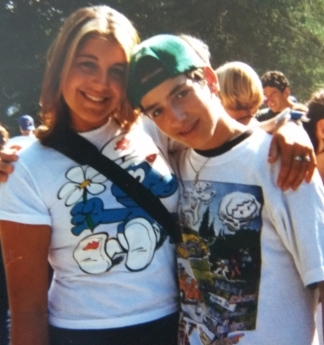
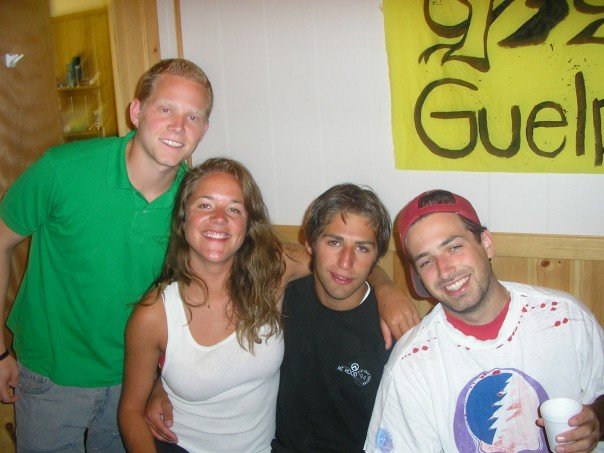
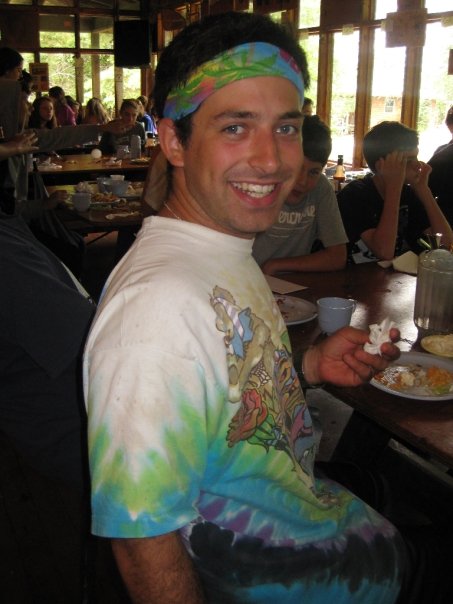
Looking through pictures from overnight summer camp a while ago really made me miss, of all things, my old Dead t-shirts. I wore a dead t-shirt consecutively every day between 1997-2000.

Bootleg Grateful Dead t-shirt culture has been written about at large. In my day I competed against CWP counselors for who had the coolest Jerry shit and the best tapes. I  held my own.

Today is August 1, Jerry’s Bday: happy birthday, big guy! Love you forever! In honour of it I’d like to catalogue My Dead Ts for posterity, with pictures where possible.

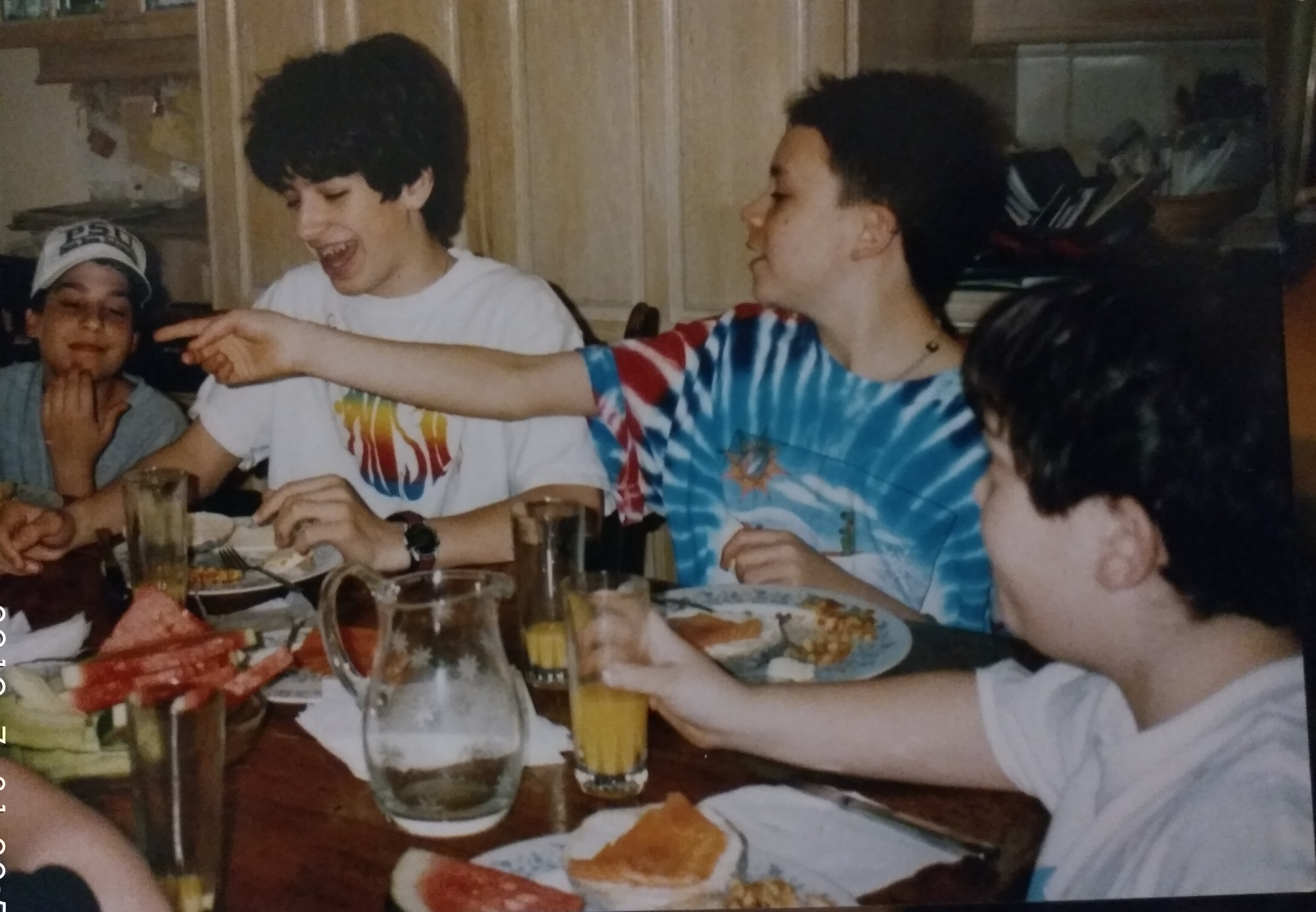
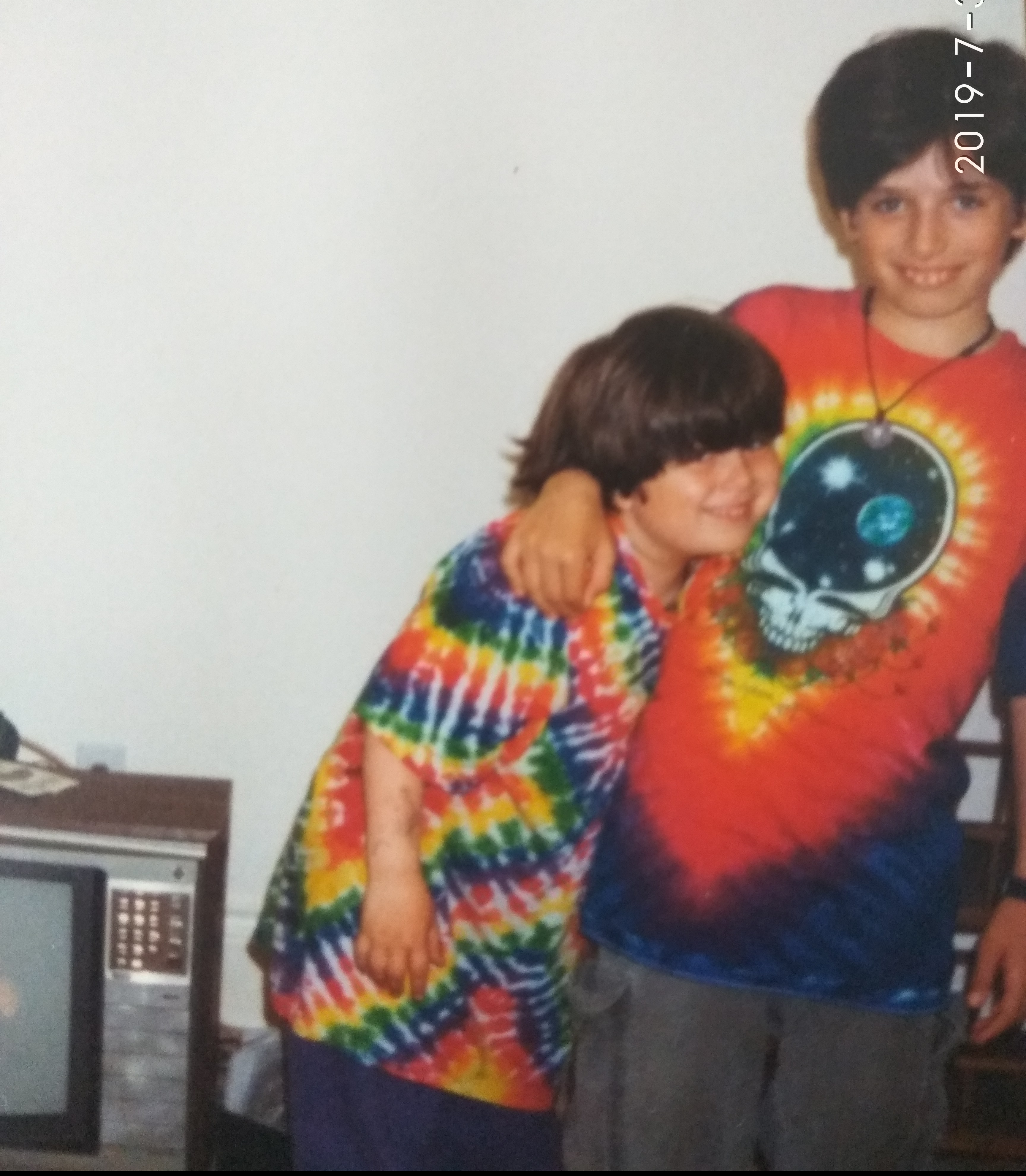
  1. “Space Your Face”—First Dead T, acquired in 1994. Standard Dead Skeleton with cool space shit inside it. This is me and my younger bro. This pic shows how long I’ve been in the game!

IMG_20190731_170350


2. “You know our love will not fade away”—Silhouette of Jerry’s face with lyrics from Not Fade Away on the back. Purchased in Vermont by my parents on a trip in ’95 or ’96.

3. “Nothing left to do but smile, smile smile”—This T was given to me by a family friend, herein called The Source, which he got from the parking lot of a Jerry-era Dead show. I got it in 1996, an early long-sleeved gem. Black and purple on either side of the stealie, with a smiley inside and the lyrics from He’s Gone, “Steal your face right off your head,” underneath.

IMG_20190731_170337

4. Sugar Magnolia T—Stealie with green and yellow on either side of the lightning bolt. Underneath was lyrics from Sugar Mag, “She’s my summer love in the Spring, Fall, and Winter…” Tour dates on the back from Fall 92 Dead tour. Shirts like this get reproduced today, but you can’t find ’em like this anymore.

img_20190731_170238.jpg

5. Blue tie dye, Skeleton with Roses—Blue/white tye dye. Acquired from The Source. I’ve seen this shirt on other people, but it was cool! I had the same image on a window sticker that’s still beautifying my parent’s house.

6. Deal T—Jerry-era parking lot T from The Source featuring a cartoon Jerry playing poker against cartoon skeletons, with the lyrics to Deal in bubble letters. Tour dates from 92 Tour on back. This was the best shirt of them all! In 1999 I happened to be wearing this shirt at a Merl Saunders concert, who played keys with Jerry in the Legion Of Mary. Merl sang Deal that night and I was in the front row, pointing to the lyrics on my shirt he was singing. He smiled. RIP, Merl! I wish I had a picture of this T somewhere!

7. VW Busses—Lot shirt from The Source. Dates from 90s tour on back. Everybody who saw me was envious of this BEAST of a shirt, and I’d kill to have it back and in good condition (I wore it to shreds). It was the best shirt I or anyone else ever owned.

IMG_20190731_170245

7. American Gothic Skeletons—Classic Grant Wood American painting rendered in Grateful Dead styles, a male and female skeleton farmer in tie dyes and overalls, etc. Lot t-shirt given by a good friend’s older brother—Source 2. This shirt was COOL!

8. Yosemite Sam Dead—frosh shirt from early 90s, inherited from Source 2. You can’t see the ‘stache on the skeleton, but it was there alright.

yo sammity sam Dead t

10. Blues for Allah—Dead at the Pyramids Egypt t-shirt, acquired in 1998. “What good is spilling blood, it will not grow a thing.” A friend bought it for me when she visited Israel. I still have this shirt!

IMG_20190731_170232

11. Warrior skeleton—this low key Dead T-shirt had a pic of a skeleton on horseback wearing native regalia, on his shield was an ad supporting the Rex Foundation, named after a Dead roadie who died. Acquired from The Source.

12. The Wheel—Jerry Bear riding a motorcycle, green tye dye. I gave this to a close buddy and devoted Dead Head. I got a lot of shirts in my day, more than I gave away.

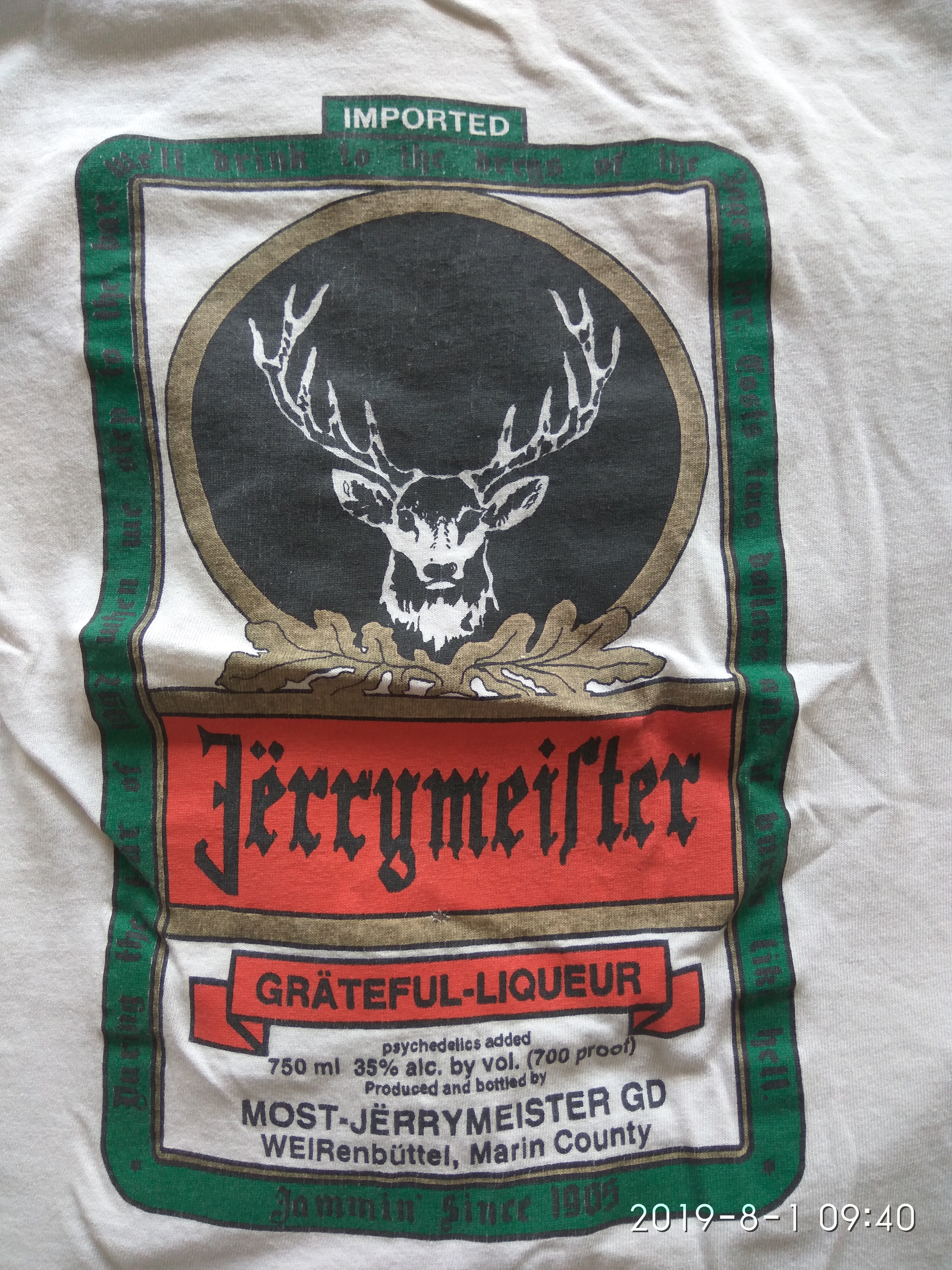
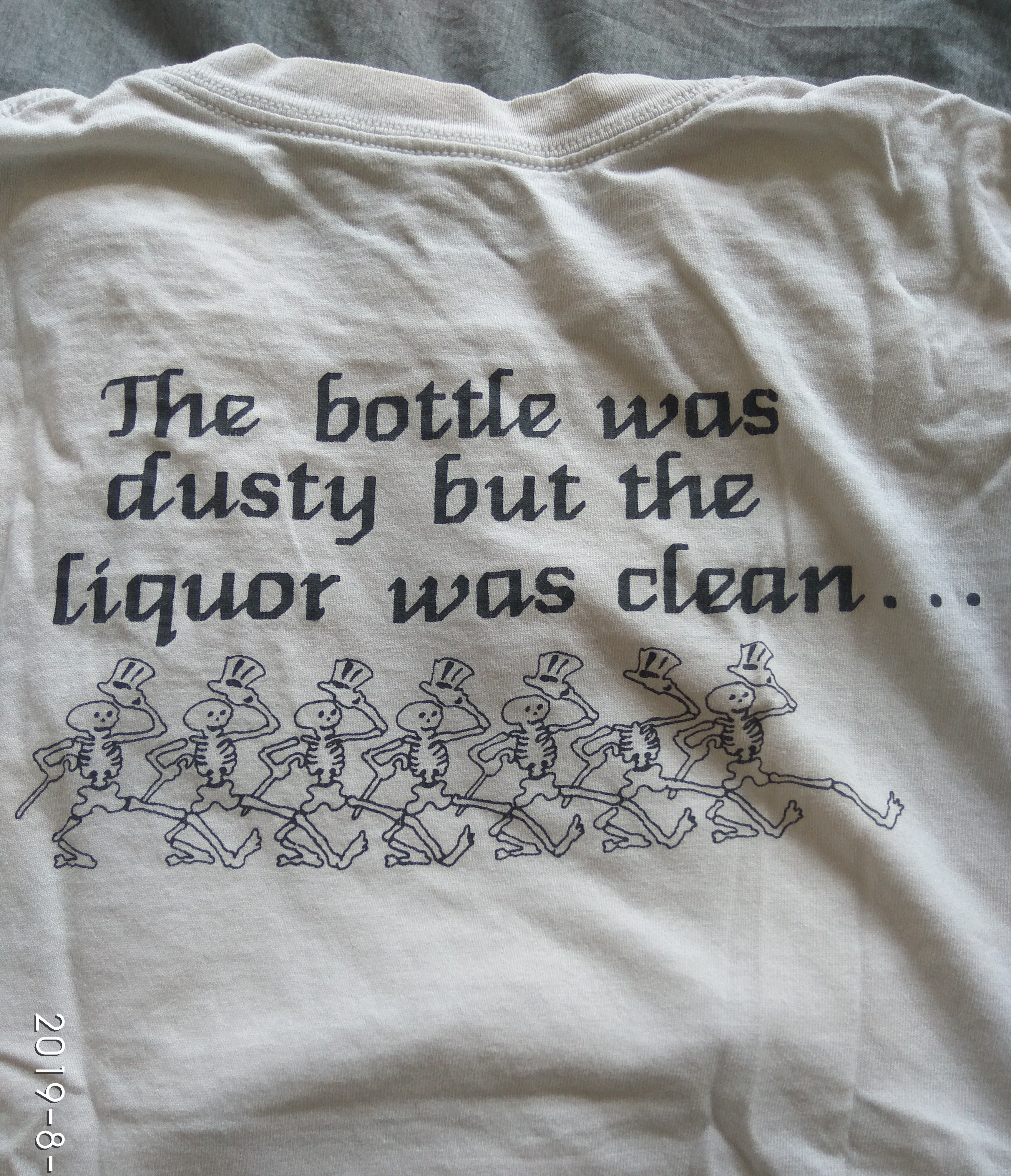
13. Jerrymeister—people think this is a booze shirt, but it’s Jerrymeister. Lyrics from Brown Eyed Women on the back. Purchased at Grateful Fest in Ohio, ’09.

IMG_20190801_094037img_20190801_094058.jpg

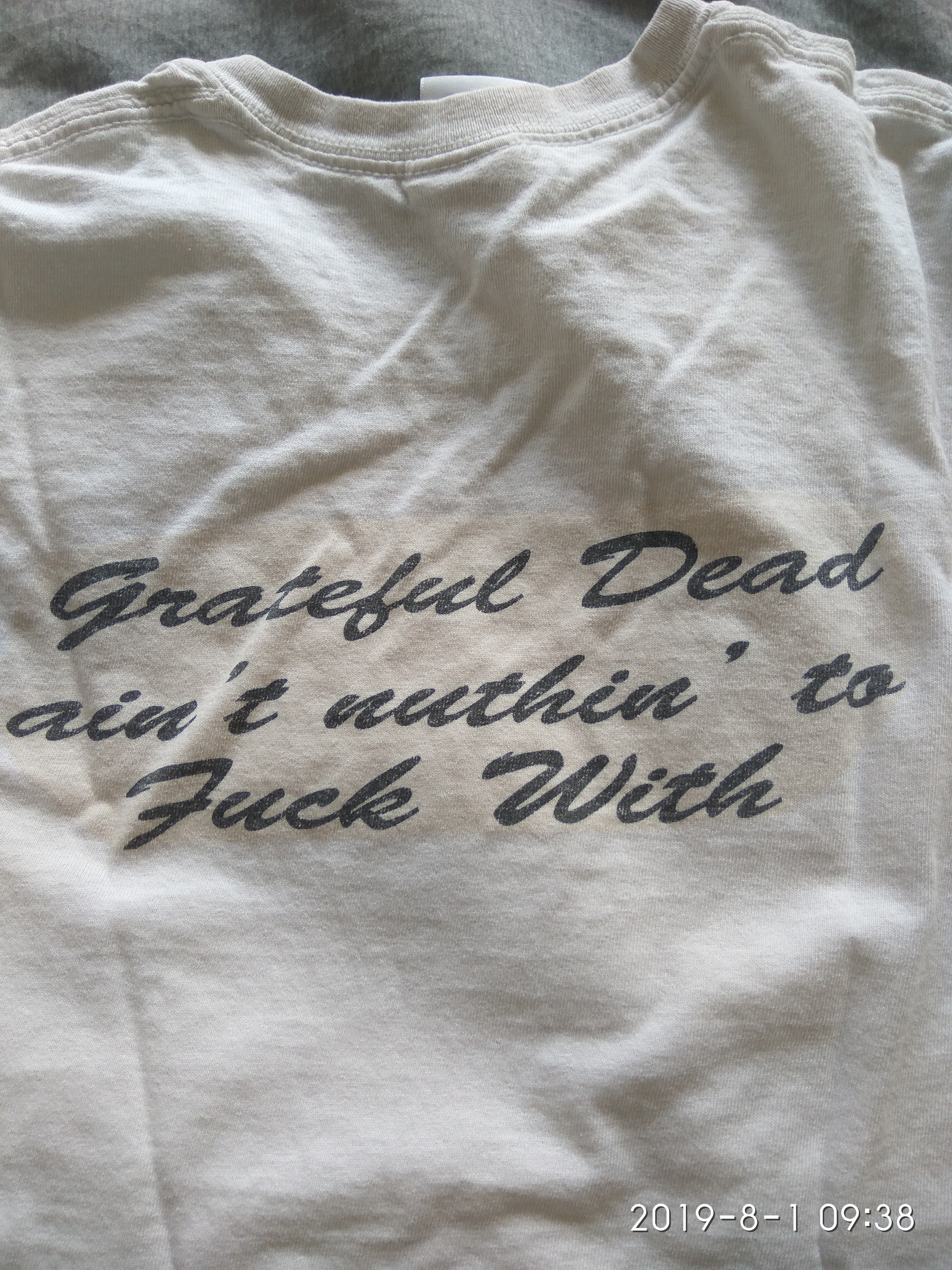
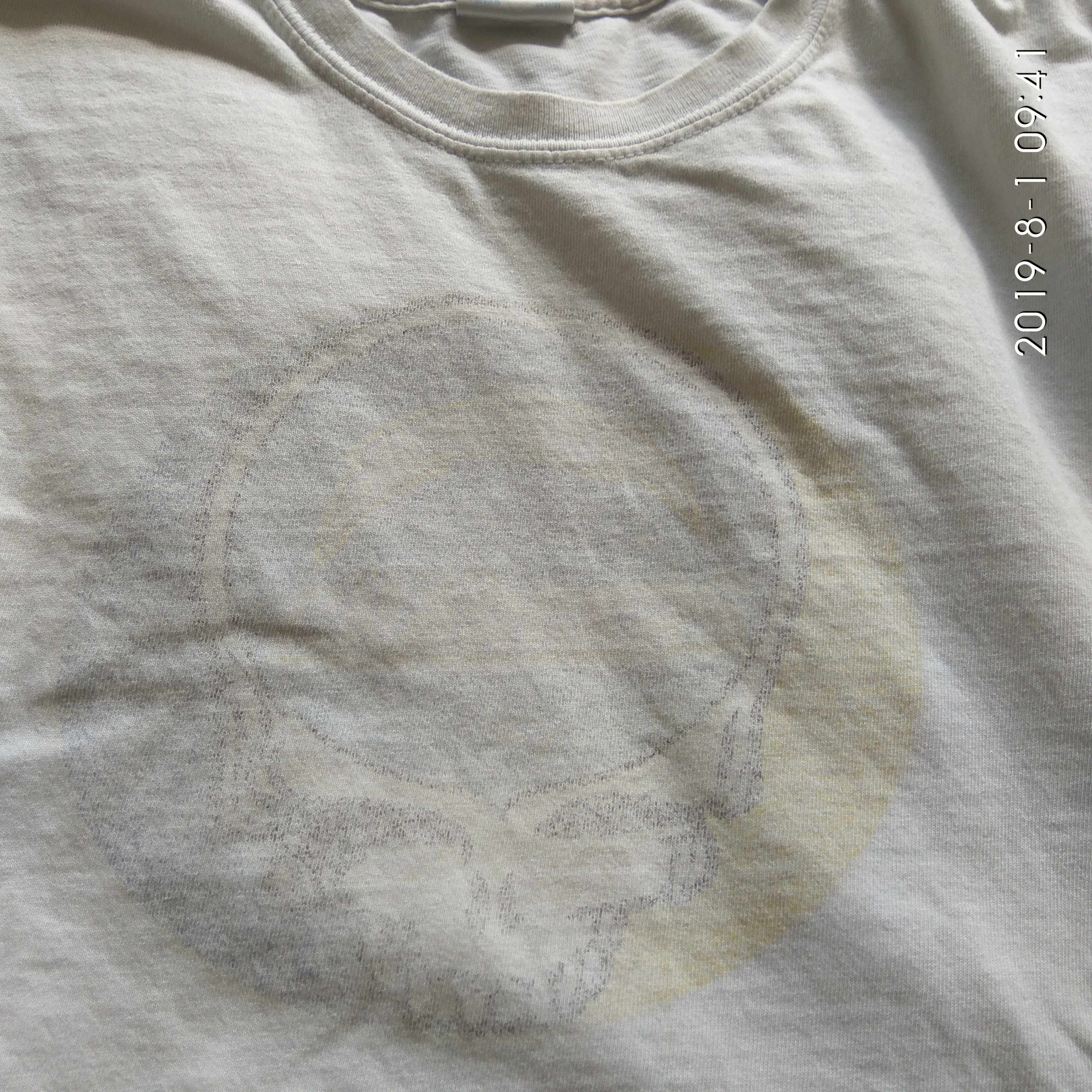
14. “Grateful Dead Ain’t Nothin’ to Fuck With”—Dead and Wu Tang mash-up. Phish show parking lot, SPAC, ’14.

IMG_20190801_093835.jpgIMG_20190801_093814


15. San Diego Chargers/ Stealie—Chargers/Dead mashup. Grateful Fest, ’09. Pretty much just a white t-shirt at this point.

img_20190801_094121.jpg

16. Ohio Buckeyes/Stealie—Dead/Buckeyes mashup, Grateful Fest ’09. Gave to a beloved friend.

17. Pink/Salmon Jerry Stealie—from Grateful Fest, ’09. It’s a nice thick cotton piece, of higher quality than other bootleg shirts, which you come to appreciate after a while.

img_20190731_172418.jpg

18. Jerry Bear—this one was a gift, a friend saw it at The Gap! Weird, but hey. Dead shirts once supported people in need of money to see more Jerry shows and now it’s sweatshops, but this shirt does

IMG_20190731_172429.jpg

19. Sphinx Jerry Bear tie dye—This had a Jerry Bear as a Sphinx, and there was a pyramid or two. I vaguely remember getting it at Kensington in the 2000s. Looking through pics I saw it. I also had another Space Your Face tie dye, and probably some others I can’t remember to be honest.

random tie dye

20. Cats Under the Stars: I got a JGB T-shirt in San Fran in 2012, with the famous logo from the Cats album.

Honourable Mentions:

You get to spoon with Jerry every night when this is your blankie. Acquired in late 90s from The Source, who I understand got it from Haight/Ashbury.img_20190801_095657.jpg

Technically this is not a Dead shirt. My good buddy, younger brother of Source #2, is seen rocking a serious tie dye skiing/snowboarding Jerry Bear shirt.

save_20190731_230011.jpeg

Misery: the city after canoe tripping

03 Wednesday Sep 2014

Posted by jdhalperin in Statements

≈ 1 Comment

Tags

canoe trips, city = shit, Jerry Garcia, Nature, the city

I love Toronto, but since returning from a ten-day canoe trip all urban environments sicken me. The forests and rivers have placed the scourges of the city into sharp relief. I’m conflicted: I feel like I cannot readjust to city life without losing the serenity I built up in the woods. That nature recalibrates the soul is a cliché, which doesn’t make it untrue just simply vague, so let’s inspect this.

First, five buddies and I spent ten days in Northern Quebec, shooting the north part of the Coulonge and the Noir. Algonquin doesn’t have rapids as large as the ones we shot, and though there are sections of Algonquin where solitude is complete, we didn’t see a single solitary person from about day two to six. Now for what’s superficial about the city.

Author gets doused

Author gets doused, Noire River

The city offers many places for spiritual escape or release, some free, like parks, others not, like museums and other cultural institutions, gyms, or yoga centres where unilingual instructors speak ancient languages they don’t know, and more. That businesses in the city supply life-balance is not proof that the city cares about you, rather they exist to take your money while you recover from the city itself. This compacted parasitical dynamic, this secondary gouging as you seek solace from the primary gouging, presuppose that life in the city is so hostile it requires escaping. In a larger sense these releases from work serve a crucial systematic function, to prevent citizens and workers from going insane. It’s akin to the hip company with the office ping pong table—the company doesn’t want you to enjoy working, they just want you stress-free to increase your productivity for their sake, and really nobody wants to be seen playing ping pong because it reflects poorly. These institutions just seek profit, which is their prerogative and perfectly understandable. But self-interest disguised as selflessness is the commonplace, everyday lie of the city. City life is founded on guile.

In nature, there is no purpose or motive. Nature is neutral, and always will be. It demands and offers you nothing. The actual world is just…there. No ads offer happiness or spiritual respite for a price. It is the primordial world before systems of government or business made direct or indirect demands on people. In this physical and psychological space, free of bosses, solicitations and professional or social obligations, there isn’t total freedom, but the limits, restrictions and hardships imposed on you arise naturally. And not only are they reasonable but they are not subject to questioning; you can only bring the personal effects you are willing to carry, and you cannot blame your problems here on ignorant voters or The Man. Obstacles, whatever they are, simply arise and must be surmounted. There is no alternative. No excuse or complaint will change the fact that you must make it to your campsite or you’ll have nowhere to sleep, and must make a fire if you want heat to cook food, etc.

But let’s not romanticize things too much—camping is not merely you and the elements. If it was, a couple lovely days of reflection would be followed promptly by hunger and death. You bring equipment and food from the city and you do not enter the woods without an exit plan. The outside world is never hermetically sealed off. But life feels different because the nature of work is fundamentally different, and after all work is what occupies most of our time, both in the city and on canoe trip.

Strictly speaking, very few people do work in the city that needs to get done. Even teachers, doctors, social workers and other noble professions must be at least occasionally struck by the feeling that their work doesn’t have the impact that initially attracted them to the profession. Hats off to people who find purpose despite making money! These lucky bastards are the minority. Bureaucrats, pencil pushers, PR people and advertisers, financiers, the producers and hawkers of senseless tacky garbage sold cheaply or outrageous sums—all these should have the good sense to know their work is absolutely useless. The world simply has more people than useful functions; everybody needs a job, but there’s nothing to do. Having a job is useful, even if the job is useless.

I speak here in an existential sense. Of course workers receive money for food and crap to buy in exchange for their labour (unless they’re writers or are otherwise exploitable), but the cycle is roughly this: the economy, the largest determiner of “quality of life,” depends on employment, thus employment per se is a cause in and of itself. Thus, a low (or even high) paying job that actively harms humanity, destroys the worker’s soul, and consumes all their waking hours is thought to increase their quality of life. The economy is merely a measurement of the country’s collective financial affairs, and has nothing to do with the spiritual well-being of people. But politicians and polls see “quality of life” in these terms, and these forces and this mode of thinking hold serious sway in the city.

This faulty system would equally praise all wealthy people with access to healthy food and elite schools but can’t distinguish between someone happy and suicidal. It’s a blunt view that regards quality of life only in measurable economic terms. There is something to be said for having money, let’s not be dopey artists, but soul and spirit can’t be ignored when determining quality of life, even if they defy quantification. The Earth turned for millennia before jobs in finance or PR existed. Nobody would be the worse if these and several other industries collapsed. Indeed, their total demise would probably lead to mass-bliss.

Every single work task on a canoe trip has definite purpose. You don’t do anything on trip unless it’s necessary or fun. And rather than rely on the city’s abstract, arbitrary or vague work evaluation, on canoe trips your body is the arbiter of how hard you worked. You feel it. Employed people in the city might get a promotion if they’re related to the boss, or have worked for __ number of years, or they might get fired because it’s cheaper to outsource their job to China, or getting rid of their role entirely benefits the bottom line. It’s beyond naïve to expect a fair correlation between your fate and how hard you work. The vicissitudes of the city’s relationship between worth ethic and payoff can be opaque and corrupt, nor does it have the capability to factor in unquantifiable things like soul and spirit even if it wanted to, which it doesn’t.

Nature is different. Reward and work in the woods are always governed by a simple, incorruptible dynamic: hard work gets physically easier the more you do it, and do it you must. This is the natural law. Muscles respond to paddling and portaging, and gradually these become simpler and more enjoyable. More, these tasks are never pointless or arbitrarily assigned along a top down hierarchy—boss, manager, useless employee, more useless intern. Trip life has an unselfconscious equality because you’re all in the same position. You need to portage because you’ve reached the shore, and carrying your gear across land is the only way to get to water again. The necessity of the work gives it meaning, and the rewards and pains are always in perfect proportion to the work put in. But nature is refreshingly indifferent to your productivity or how your muscles hurt. There’s no ping pong table, but if you need to chill, then chill. Pontoon, stop paddling eat something, roll a hasher, jump in the river. Nobody offers you a break, secretly judging you for being unproductive. But the rivers gives.

IMG_7264

Delicious. When we gutted him a crayfish he ate popped out, so I put that on the line and caught another next cast. Oh, generous river.

Let me absolutely clear about one thing: nature can be milk and honey but also a motherfucker. The woods offers lots of ways to be killed, and while I’ve stated that the work on canoe trips is necessary for survival that’s only true once you’ve embarked on the trip itself, which strictly speaking isn’t necessary. But canoe trips are the best vacation there is.

A vacation has two functions for the urban worker: first, it alleviates pent up work-related misery, and second, the prospect of vacation during work is a carrot that makes time stuck at work bearable. In other words, city work basically cannot be endured unless there is promise of release from it. Pretty much everyone agrees work is shit, and somehow if the world flipped upside down, we’d rather not do it if given the option.

On paper, it makes sense that vacationers aggressively seek to do as little work as possible. Sloths gorge their faces off at all-inclusives. On beach vacations, bliss is attained by remaining dormant for extended periods of time. Vegas-type gambling excursions promise glamourous thrills via ill-advised bets, outsized stage shows, cocaine and hookers. I find these fundamentally unappealing and possibly immoral. What’s so attractive about spending vacation time on a canoe trip, working?

I can invoke Max Weber’s Protestant Work Ethic, that work per se is rewarding, but this emphasis on work might distract from a better reason: canoe trips are a vacation from so-called civilization, and work is just what you do on them. (Though there are flog trips…) Nature washes away the city’s spiritual pollution. The city’s disgusting advertising everywhere, the lies we’re numbed to through sheer bombardment, the disconnected people, the enormous stacks of windows that pass here for architecture, the crippling car traffic stuck on broken concrete, our caveman mayor, media reports of the latest international atrocities—these and more are escaped with wonderful effect. This might sound like a cop out, like naturalists flee their world because they’re weak, but in fact they’re returning to the actual world that the ghastly city supplanted. It was here first.

Computers, screens, and office buildings are so pervasive that it’s easy to forget how foreign they are to our species. The industrial revolution was very, very recent compared to our evolutionary history. Human bodies and minds are designed and wired to move about in nature. Doing so feels like an ancient memory stirred up. You sweat at first, because it’s hard and unfamiliar, but you adjust soon.

The handsome eagle with its shockingly expansive wings is a worthy representative of its majestic habitat. The city’s emblem is the pigeon, probably disease-ridden and definitely disgusting to behold, accurately described as a rat with wings. Even the city’s parks and green space we loudly applaud ourselves for maintaining are only a taunting simulacrum of what was. However well-intended to impart in us a restorative, Wordsworthian appreciation of nature, they are only a token, a paltry fraction, a castrated version of what used to be. For me right now parks are no help coping with the city’s heinous aspects (roads, buildings, smog, work). Imagine about what Toronto looked like 1000 years ago, then celebrate our abundant parks.

Nature might be so comforting because it is basically people-free. Go somewhere remote to increase your odds of being somewhere that hasn’t yet been ruined by the human race. The few people you do encounter camping are there to do the same thing as you. They know the guide book and the ways of the forest and water, in the same way it’s unnecessary to explain who Jerry Garcia is at a Phish show. But a Phish show has thousands of people, some primarily there for drugs. The woods only a handful, and it’s unforgiving to amateurs. It rewards experience and purer intentions, though of course nature lovers can die in the woods.

Many differences between city and nature are more obvious, and no less important. City lights kill the stars, which illustrates perfectly how nonchalantly, how easily, even if indirectly, the city ruins the wonders nature gives us freely. In the bush, water is fast on rivers, vast on lakes. We are separated from Toronto’s waterfront by a highway. The sun, the only source of light in the woods but not the city, wakes you up and announces bed. Electric lights cause irregular sleeping patterns. Animal chatter and gushing water is nature’s background noise, replacing car horns and pop up ads. You involuntarily digest these contrasts in thoughts and feeling and they accumulate somewhere deep inside you. It’s this interconnectivity between you and all these elements which causes that precious, impossible to articulate thing—spiritual bliss. Hopefully you’ve filled up a reserve of it large and intense enough to last a considerable time while you’re stuck in that godforsaken shithole, the city.

Twitter

Follow @JDhalperin
Tweet

Enter your email address to follow this blog and receive notifications of new posts by email.

Join 1,020 other subscribers

Essential sites

  • Grateful Dead Chords/Tabs
  • Neil Young Chords/Tabs

My Writing

  • Huffington Post
  • Maclean's
  • Music Writing
  • The Star
  • the Walrus Laughs
  • Toronto Review of Books
  • Toronto Standard
  • World Is One News

Topics

  • Comedy (18)
  • Literature (13)
  • Politics (25)
  • Sports (16)
  • Statements (35)
  • Uncategorized (36)

Create a free website or blog at WordPress.com.

Privacy & Cookies: This site uses cookies. By continuing to use this website, you agree to their use.
To find out more, including how to control cookies, see here: Cookie Policy
  • Subscribe Subscribed
    • Jeff Halperin
    • Join 50 other subscribers
    • Already have a WordPress.com account? Log in now.
    • Jeff Halperin
    • Subscribe Subscribed
    • Sign up
    • Log in
    • Report this content
    • View site in Reader
    • Manage subscriptions
    • Collapse this bar
 

Loading Comments...