• About the Author
  • Books
  • Vinyl
  • What the critics say about Jeff

Jeff Halperin

Jeff Halperin

Tag Archives: Roberto Bolano

Mad, Haunted Amalfitano

30 Friday Aug 2024

Posted by jdhalperin in Literature

≈ Leave a comment

Tags

2666, Amalfitano, Jeff Halperin, Roberto Bolano

The second part of 2666 begins with Amalfitano, the academic the Critics meet at the end of Part 1. He’s from Chile, lived in Spain, but moved to Santa Teresa. Actually it begins really with Lola, his daughter’s mother.

After Amalfitano establishes he’s going crazy in Santa Teresa, paranoid of the violence, the narrative moves to Lola abandoning the family, running around Europe (Barcelona, San Sebastian, elsewhere), pursuing a mad poet before and after he was committed to an asylum. It’s clear she loves him, but it’s unclear if they ever had sex, despite what Lola says about that party, and the poet appears to be gay.

Before 2666 hits you with a gauntlet of grisly murders, it offers us this, a free woman empowered to roam and make mistakes that harm her family, emotionally, but not physically. The damage is mostly left unsaid, but in her years of absensce, Amalfitano goes mad, though you can’t really call it madness when the thing he’s paranoid about is very real. “Madness really is contagious…”

He does talk to himself, hearing the voice of his overtly homophobic grandfather. Amalfitano has the idea, maybe from a science fiction novel he read, he can’t remember, but he believes “(or likes to think he believed)” that people in other cities don’t exist until you get there, and that the effort it takes for them to put themselves together was the result of the phenomenon known as jet lag, “which arose not from your exhaustion but from the exhaustion of the poeple who would still have been asleep if you hadn’t traveled.”

Is it madness if what’s making you lose your grip on reality very much exists, or is at least threatening and constantly lurking, all around you? The idea about jet lag here assumes other people get tired based on what you do, so while it’s speculative sci-fi and absurd to really believe, it inverts what Amalfitano really experiences. “They turned the pain of others into memories of one’s own.” Instead of other people making him feel scared, his travel makes other people tired (jet lag). So the theory goes.

But more than that, it doesn’t need to be real. It’s consoling. Amalfitano’s remarks could describe the novel 2666 itself:

“They turned pain, which is natural, enduring, and eternally triumphant, into personal memory, which is human, brief, and eternally elusive. They turned a brutal story of injustice and abuse, an incoherent howl with no beginning or end, into a neatly structured story in which suicide was always held out as a possibility. They turned flight into freedom, even if freedom meant no more than the perpetuation of flight. They turned chaos into order, even if it was at the cost of what is commonly known as sanity. [page 189].”

One of the novel’s most prominent and recurring images is the geometry textbook Amalfitano pins on his clothesline. A description of the geometry textbook’s separate parts could just as easily describe 2666: “each independent, but functionally correlated by the sweep of the whole.”

Amalfitano’s jet lag idea only came up because he couldn’t remember where the geometry textbook, Testamento geometrico, materialized from. Hanging it was Marcel Duchamp’s idea, “leaving a geometry book hanging exposed to the elements to see if it learns something about real life.”

“You’re going to destroy it,” said Rosa.

“Not me, nature.”

Amalfitano asks himself, “What made me come here? Why did I bring my daughter to this cursed city?” He watches the book hang “impassively” and resists the urge to take it down.

Later this let-it-be attitude will be in stark contrast to a sadistic prison inmate Klaus Haas, with long arms and iron hands, who believes “every individual controls his own fate.”

Agency is a recurring theme in 2666. Do the poor innocent victims have any? Do the journalists or even detectives? The few people interested in actually helping get to the root of the crimes face enormous obstacles, as they run up against powerful, deeply-entrenched institutions and the violently or violently apathetic attitudes they perpetuate. All Amalfitano knows is that he’d like to get his daughter away to Spain, where she’ll be safe. Though Lola wasn’t always very safe in Spain, and there was a fair amount of madness there, too.

Telepathy themes continue in Part 2. Not only does his grandfather speak to him, not only does Lola imaging she establishes telepathic contact with the poet [page 175], but “he thought about the telepathic Mapuches or Araucanians [page 216”], and recalls a short academic book examining the early history of the independence of Chile. This section touches on the a book about the secret history of the Aracunians, a group of Indigenous from Chile, whose state was “politically identical to the Greek state,” along with Chilean migrants who lived in Northern India and kept in permanent touch via telepathy.

Once the Spanish invaders learn that some Aracunians are telepaths, they cut their power by killing them, so the Aracunians develop another secret mode of communication, “Adkintuwe”: the power to send messages by the moving of tree branches. The world of Santa Teresa is dark and violent, but so is the broader interconnected world itself. If reality is so grim, why not look to the supernatural for help?

2666 is permeated by ghostly images, nightmares, and messages that seem to come from beyond. There are echoes within the novel’s sections that reinforce the theme that everything in the world itself is connected. The seer Florita Almada continues this in Part 4, and she’s alluded to briefly in the Amalfitano section. He sees her on TV [page 212].

It feels like the night sky, the stars, are the symbolic landmark that speak to characters in every section. They’re real, of course, but they don’t really say anything. They’re just there, visible to everybody in every section, in every part of the world. But there are beautiful extended passages about the stars, different kinds of stars (Hollywood stars, star athletes, dead stars we see as brilliant light in the sky), from a sweep of characters.

Many novels do this, of course! But stars hold a special significance in 2666 as the medium providing ballast in a topsy-tuvy world, a landmark hanging over the insane-real-dream world characters really live in. It’s like they gaze at them, hoping to see beyond Santa Teresa, hoping the dreamy-mythological thing stars represent manifests in their life instead of the cold haunting darkness cursing life in their city.

The Amalfitano section closes with a dream, fittingly, in which Boris Yeltsin, who looks as if Amalfitano invaded his dream and not the other way around, gives him a formula: “Life is demand and supply, or supply and demand, that’s what it all boils down to. But that’s no way to live. A third leg is needed to keep the table from collapsing into the garbage pit of the void. So take note. This is the equation: supply + demand + magic.” Magic is defined as “epic and it’s also sex and Dionysian mists and play.” Maybe it’s also madness and telepathy.

At the end of the dream, Amalfitano, the mad seeker of supernatural consolation who pins a book to a clothesline where it hangs impassively to its fate, “had no choice but to awake.”

Tone and Ambiguity in Bolano’s 2666

19 Monday Aug 2024

Posted by jdhalperin in Literature

≈ Leave a comment

Tags

2666, Jeff Halperin, Roberto Bolano

You can’t talk about the core subject of 2666 unemotionally, the mystery of missing and murdered porr women in Mexico. How exactly, as a writer, do you approach this topic, then?

In section four, about the killings, Bolaño is as detached and cold as a newspaper headline writer. This part of the novel itself is often newspaper clippings. They leave you wanting to know more, they’re open-ended.

Elswhere, throughout the novel, Bolaño’s tone is usually blunt and declarative, but is often full of contradictions and second-guessings. A character will say something matter of factly and then just as quickly backtrack, saying they aren’t sure, it could just as easily be the exact opposite.

2666 is told from the perspective of people whose job it is to know things–critics, professors, journalists, detectives–and they very seldom do. The closer they get, the less they know, and this theme is declared hundreds of times in sentences that pronounce one thing and then reverse course. The reversals are small and large, on different scales. But they encourage the reader to believe something before pulling the rug out a bit.

Here are a few examples from the text to illustrate this point:

“One day, when more than three months had gone by since their visit to Norton, one of them called the other and suggested a weekend in London. It’s unclear whether Pelletier or Espinoza made the call. In theory, it must have been the one with the strongest sense of loyalty, or of friendship, which amounts to the same thing, but in truth neither Pelletier nor Espinoza had a strong sense of any such virtue.” [pg. 64]

“And Norton told them no. And then she said maybe she did, it was hard to give a conclusive answer in that regard.” [pg. 72]

“It was Morini’s idea, because Morini had somehow learned that a man he considered to be one of the most disturbing painters of the twentieth century was living there. Or not. Maybe Morini hadn’t said that.” [pg. 87]

“He had the eyes of a blind man. I don’t mean he couldn’t see, but his eyes were just like the eyes of the blind, though I could be wrong about that.” [pg. 127]

There are lots of other examples, these are obviously all from The Part About the Critics, the first section. Ambiguity is one of the novel’s major themes. People are trying to figure something out all novel, then don’t, or can’t, for one reason or another. They might get very close, but even when they do, all they can pronounce with certainty is that they’ll never truly get all the way there: “Archimboldi is here,” said Pelletier, “and we’re here, and this is the closest we’ll ever be to him.” [pg. 159]

Indeed, the nearer they get to the mysterious writer, the more they “reread novels by Archimboldi that suddenly they didn’t understand.” [pg. 130]

Sometimes the characters [Harry Magana] have an outsider’s perspective, they don’t understand Mexico or Santa Teresa, but try hard to solve it and come up short. Sometimes it’s the opposite, that they’re insiders too close to Santa Teresa to even pursue answers about the killers, knowing its danger and futility. But Bolaño toys with us all along in regards to much smaller questions, not just the bigger ones.

Bolaño does this sentence by sentence, but also on a macro scale, in the novel’s structure. The opening of the novel is about trying to somehow locate the elusive novelist Archimboldi, while the fifth and final section is told from Archimboldi’s perspective and we’re with him the whole time.

This trick of conditioning the reader to both know and not know things all while continuing the search for truth makes the novel disorienting while luring you in deeper. You get accustomed to ambiguity, uncertainty, even while determined to forge ahead to pursue the answers. Whatever uncertainties lay ahead in the novel, you can’t trust what you think you already know, either.

Bolaño said that 2666 has a “hidden centre” in addition to the physical one, Santa Teresa, and there’s lots of speculation about what exactly this means. Given that the novel’s name 2666 comes from a different Bolaño story, the answer to the “hidden centre” might very well be contained outside this novel, too. There’s no end to the speculation and guesses. It makes the reading fun and engaging, like a puzzle that both has multiple answers and no answers but is somehow rich and not futile because that’s how reality is. It’s like playing hide and go seek with someone who may be hiding outside the boundaries of the game, and who may not even exist. The game is as fun as the search because that’s all there ever is.

Like the characters in the novel, readers need to content themselves to both knowing and not knowing. To the main question, who is responsible for the killings, is there even one specific answer? Is it a single person or group? Are the killings related? Are some things unknowable? It feels typical of the world of this novel to not even know that. Lurking threats are not the same thing as really knowing, even if the feeling of fear is real.

This is a discussion about the larger themes, but on rereading this novel I’ve felt intrigued by how often characters and the narrator cast a dubious light on things they’ve just said, and the dynamic of such sentences feels like it parallels the larger search for answers in the novel’s biggest question.

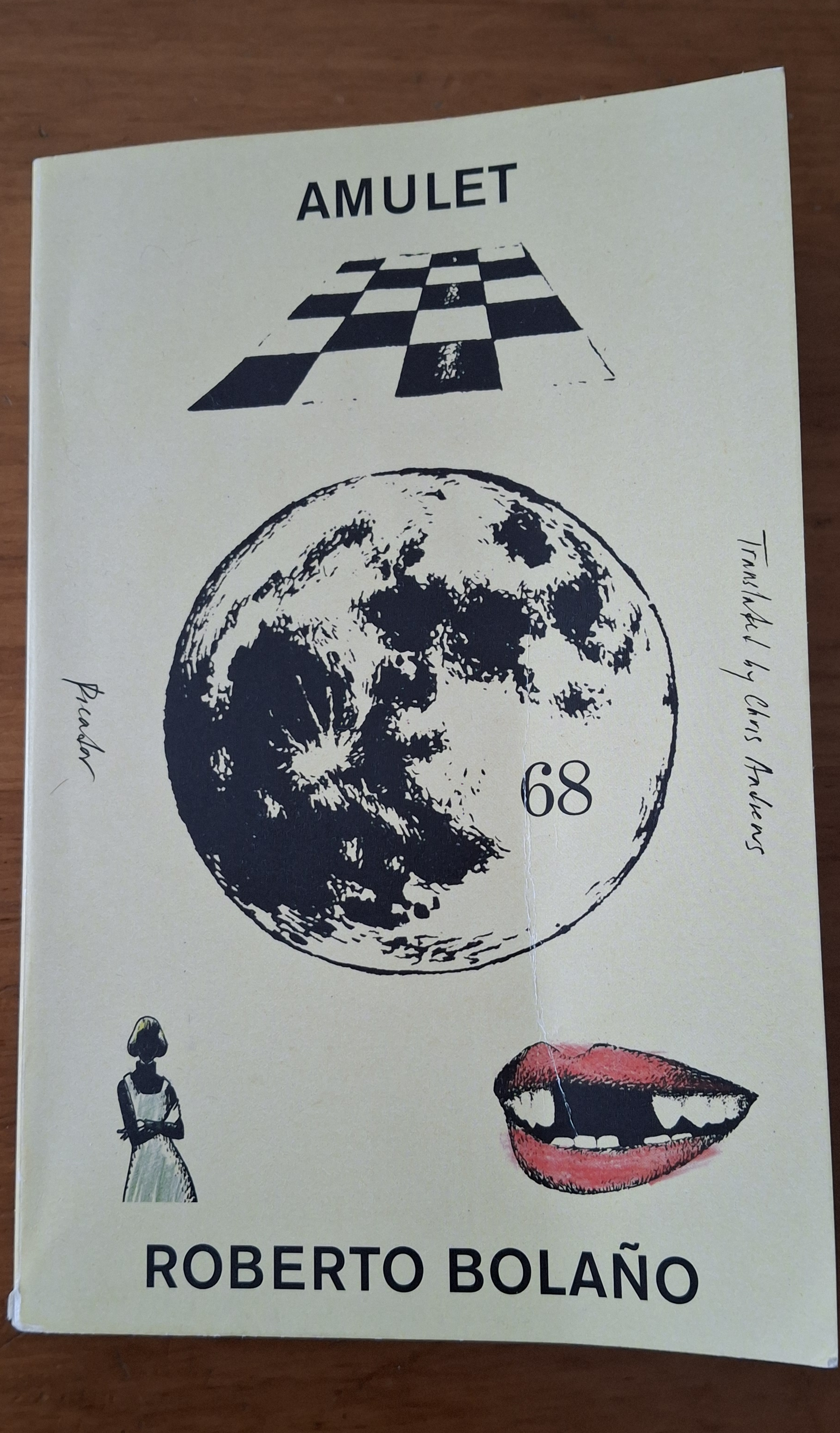
…”Not a cemetery in 1974 or in 1968, or 1975, but a cemetery in the year 2666, a forgotten cemetery under the eyelid of a corpse or an unborn child, bathed in the dispassionate fluids of an eye that tried so hard to forget one particular thing that it ended up forgetting everything else.” [excerpt from Bolaño’s 1999 short story “Amulet.”]

In this type of dark and foggy world, very much the world of 2666, certainty is anything but assured.

Twitter

Follow @JDhalperin
Tweet

Enter your email address to follow this blog and receive notifications of new posts by email.

Join 1,020 other subscribers

Essential sites

  • Grateful Dead Chords/Tabs
  • Neil Young Chords/Tabs

My Writing

  • Huffington Post
  • Maclean's
  • Music Writing
  • The Star
  • the Walrus Laughs
  • Toronto Review of Books
  • Toronto Standard
  • World Is One News

Topics

  • Comedy (18)
  • Literature (13)
  • Politics (25)
  • Sports (16)
  • Statements (35)
  • Uncategorized (38)

Blog at WordPress.com.

Privacy & Cookies: This site uses cookies. By continuing to use this website, you agree to their use.
To find out more, including how to control cookies, see here: Cookie Policy
  • Subscribe Subscribed
    • Jeff Halperin
    • Join 50 other subscribers
    • Already have a WordPress.com account? Log in now.
    • Jeff Halperin
    • Subscribe Subscribed
    • Sign up
    • Log in
    • Report this content
    • View site in Reader
    • Manage subscriptions
    • Collapse this bar