
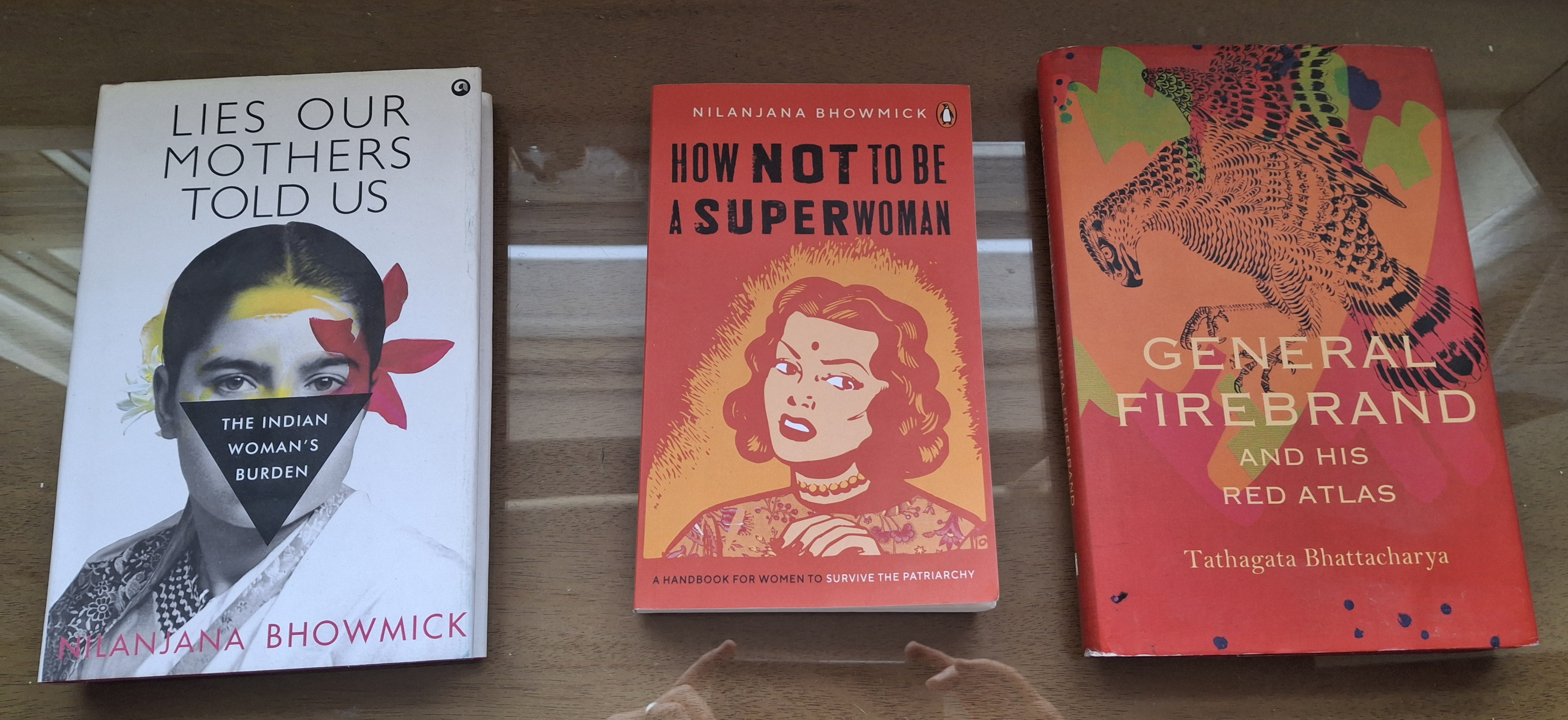
I recently read a wonderful Nilanjana Bhowmick essay defending reading culture in India, and while local issues about reading there are very different than in Toronto, much of it resonated. Nila was replying to a Guardian article, which claimed, “India hasn’t made the transition to a literate, book-reading class.” What a cheap shot. She had two main counterpoints.
The first was that India has over 120 languages and thousands of dialects, and reading works very differently there than in countries like the UK or Canada. Indians may read poetry in their mother tongue, policy in another language.
Canada has two official languages, even if there are 72 Indigenous languages and residents and immigrants here speak 400+. Still, French and especially English predominate.
But what I found very interesting was her distinction between a “reading culture” and a “reading class.” She cites US sociologist Wendy Griswold in saying a reading culture is one where people read to be “culturally competent and economically successful.” Basically, people read for practical reasons, to get cultural and professional information.
In contrast, a “reading class” is about a small group of people with the free time and education to read a lot for non-utilitarian reasons, for pleasure. Nila isn’t criticizing either mode, just making the distinction; Nila is a friend of mine, married to another friend, whose father and grandmother are iconic, revered novelists who each have enormous, passionate readerships.
Neither she nor I doubt reading is good, but I want to use her article as a jumping off point to discuss related things.

Is Reading Privileged?
If reading is “privileged,” it’s because reading consumes a lot of free time. Reading a tome nobody’s talking about takes hours and mental energy people don’t have or don’t want to devote in our hurried, expensive world. In people’s small window of time, it’s understandable they want a break, maybe watch a popular movie or whatever’s streaming—something they can talk about with other people. All fair enough.
However let me take the opposite position, which I believe in.
Books are deeply affordable. A brand new book costs $20-45 dollars. You can buy used books for much less, $5-20, or even get them for free from the library. Copyrights expire after 95 years, so you can download old classic novels to an e-reader for free. In a world of $20 sandwiches, how can such a rich pleasure that’s almost free like reading be “privileged”?
The idea that reading Canon literature requires education can be true, but not necessarily. People who read highbrow stuff in university may be more likely to get into other heady stuff later, but it’s still just sitting on the shelf for everybody. That old classics cost virtually nothing is probably why they’re not advertised to people en masse! If you can have a beautiful, formative experience without spending money, why spend money on anything else?
And before radio, TV and the internet, people across classes commonly read what today would be considered rarified stuff, like Milton’s Paradise Lost or the Romantic poets. Digital technology probably shapes reading habits more than “education.” How can people not have enough free time to read in a world where, between work and recreation, the average Canadian spends 5.5 hours every day looking at a screen?
How Do You Measure Reading?
Kids naturally spend way less time on screens (they don’t have jobs), and I’m sure unpacking the data surrounding screen times would paint different pictures for different demographics, but the thrust remains: people spend a lot of free time on screens that could be spent in other ways. If books were as addictive and omnipresent as social media, I’m sure people wound find more time for reading them.
Nila makes the point that it’s difficult to measure how a society reads. How do you gauge it, exactly? What metric do you use? English books sales? Book fair attendance?
Reading is such a personal, esoteric thing that defies easy quantification. Measuring sales isn’t the same as measuring reading. If a person buys a book they never open, that will register in economic data about book sales, but if a person borrows a book that changes their life, that won’t show up in any stats. Two of my favourite books I paid $1 each for, one from a book sale at my local bank (Barney’s Version), the other at an antiquarian book store’s closing sale (Divided Soul: The Life of Gogol).
All I know is that reading is rightfully and universally considered one of the most beautiful, important things a person can do. Whatever the book. “Critical thinking” is supposedly universally valued too, so it’s funny to have to defend the very idea of reading, or a certain type of reading.
Everybody knows reading to children is crucial to their development and can only be a great thing to do. I get why reading is “privileged” as you get older and responsibilities grow, but reading doesn’t stop being wonderful. If it’s a privilege, it’s certainly not a hollow or bad one. May we all enjoy such privilege in life!
It’s hard not to think that if Big Business profited from people reading voraciously, reading would be talked about and marketed in a way it currently isn’t. Today, luxury consists of comfortable travel to posh places, exclusive gourmet dining, couture or designer clothes, luxury cars. People are supposed to aspire to these things, and be seen consuming them, if not in real life then on social media.
There are even lesser tiers of expensive things marketed as less hollow “lifestyle” products that people “deserve” because they’re “worth it.” Skin creams, spa treatments, branded accessories, premium home goods. You know.
Everybody deserves to read, too, but that’s seldom on these lists! Read widely, not just the latest best sellers, which sometimes are promoted. Reading is pushed as something you do on a beach vacation—you get the free time to read, but only after paying for flights and hotels. In a money hungry world, the only real currency there is or ever will be is time.
“Performative Reading”
I don’t know how saturated in online discourse you need to be to have encountered the term “performative reading,” but apparently that’s when a person goes to a bar, coffee shop, public transit or any public place and reads a book they want to be seen reading, supposedly to signal what kind of person they are or aspire to be.
I hate this notion for several reasons.
First, on a basic level, fuck off. That argument alone is enough for me. People can do what they want without concealing themselves at home. It’s absurd to think otherwise. I don’t want to live in a world that automaticaly attaches that kind of hollow consumer subtext to every human behaviour and activity.
But even to play that game, isn’t signalling who you are by your consumption patterns supposedly the entire basis of our society? People work for years to afford a certain kind home, a certain kind of car, certain kinds of clothes, and that’s fine, but…reading a book in public somehow crosses a line?
Again, it’s hard not to notice that we accept or even praise consumption patterns that benefit industry, and mock what don’t. Hopefully I’m having a one-sided argument aloud with myself here (I do that sometimes), and we all agree the idea of “performative reading” is not real or that it’s dumb. That’d be lovely.
Nila concludes that Indians read in ways that suit them, given the economic conditions they live under. I’m sure she’d agree that if reading is a privilege, it’s one we should all enjoy and be given space to enjoy. Those of the reading class shouldn’t judge reading cultures for being dumb unsophisticated philistines because maybe they haven’t read the Canon, just like those in reading cultures shouldn’t judge those in the reading class for being snobs or dorks with too much spare time on their hands.
All reading is good and we all need to chill out, judge less and read more.
 Jeff Halperin