When I first got to India, I knew nothing about caste. Nothing. This is embarrassing to say now, because it’s a monstrous plague woven throughout Earth’s most populated country. There are over 200 million Dalits, or “untouchables.” Yet many North Americans know nothing about it. Many Indians don’t, either.
I confess: In my first weeks in India, I told a colleague that, not knowing what caste was, I suspended my judgement about it. She looked at me in horror. I get my reluctance to comment, but understand the horror in her face more. “Dalit” may be a vague term but “untouchables”?
I learned more about caste by observing, gradually. It didn’t dawn on me right away. The compound security guards, the night watchmen, my company’s drivers, my friend’s gardener Hera who sometimes pedalled me to work on his bike rickshaw…weren’t they all of lower caste, if not Dalits? At work, at the English-language news station, I was surrounded by English speakers. None of these people spoke English. I couldn’t talk to them.
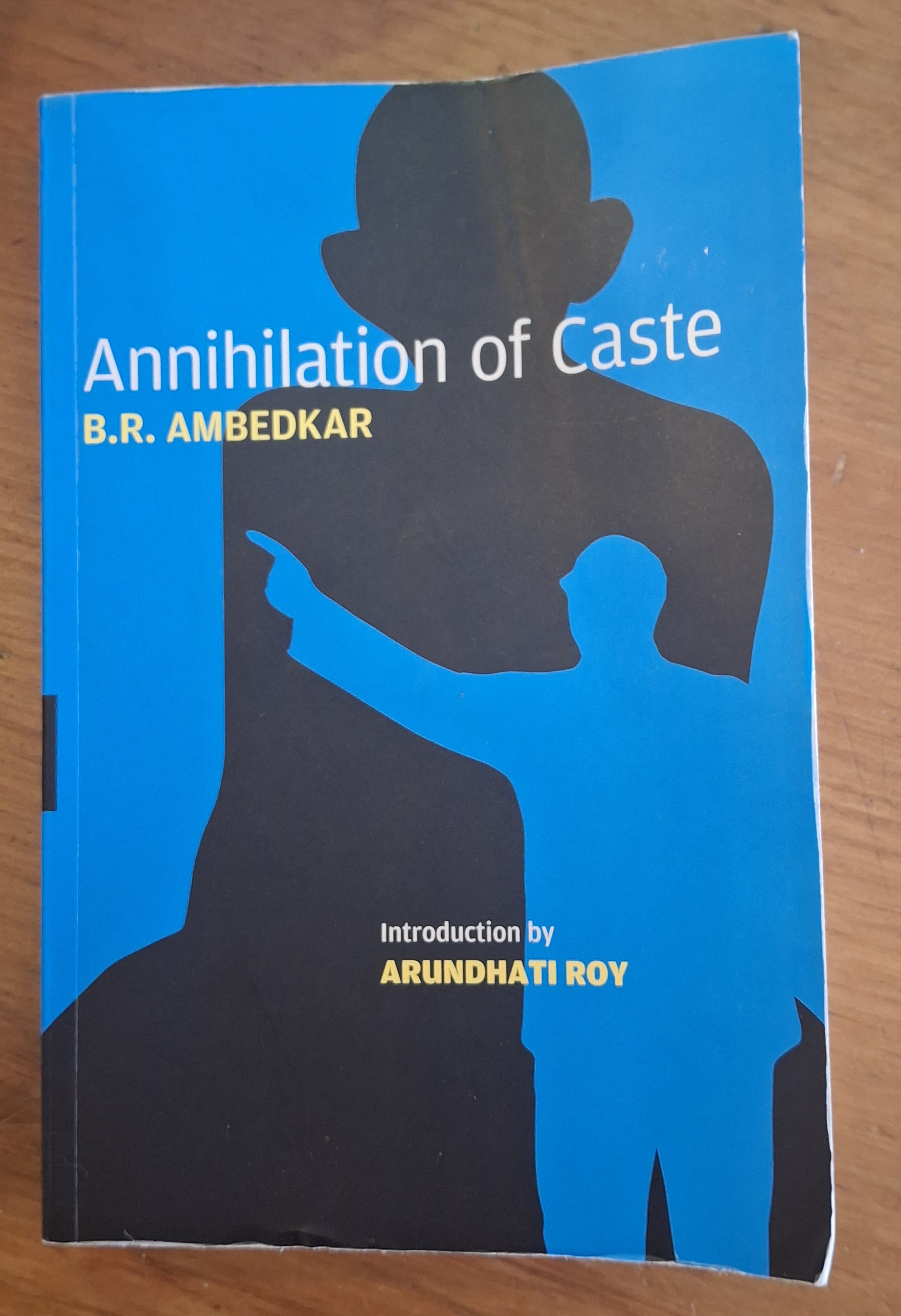
I also read about caste from a couple devastating books. The first was Annihilation of Caste by the great B.R. Ambedkar, a Dalit jurist, economist, and activist who was the chief architect of India’s Constitution. This book is actually a speech Ambedkar was supposed to deliver in Lahore about uprooting caste. The speech and long introductory essay by novelist Arundhati Roy do a thing that will shock many: criticize Mahatma Gandhi. Who was after all a politician, not just a martyr or saint.
The other book was Caste: The Origins of Our Discontent by Pulitzer-winning journalist, Isabel Wilkerson. This 2020 book compares India’s caste system to racist structures in the US and Nazi Germany. As a Jewish North American who spent time in India, the explicit links between these three things shocked me. My ignorance made me shudder. I get that, on one level, why would I know about caste when it isn’t talked about here? But that’s precisely what made me shudder.
I recommend reading these books but won’t get into either here too much. They’re quite overwhelming. For example, Arundhati Roy claims in her intro (page 24) there are about 4,000 endogamous castes and sub-castes in Hindu society, each with its own specified hereditary occupation. I knew about Brahmins and Dalits, but nearly 4,000 castes?
A funny thing happens to white people who spend time in India: you see and learn about many things so shocking you feel the need to discuss them, but there’s the overwhelming sense that you can’t fully understand what you’re seeing, which makes discussing it all difficult.
I can only scratch the surface when it comes to describing caste. This is anything but a full account, but I hope the following is accurate. With that in mind, here are some reflections based on my time there.
Seeing But Not Recognizing Caste
I didn’t explicitly hear about “caste” when I was first exposed to it, so I didn’t categorize it that way. My friend told me that the people ironing clothes in his sector with coal-filled charcoal irons descended from a long line of ironers.
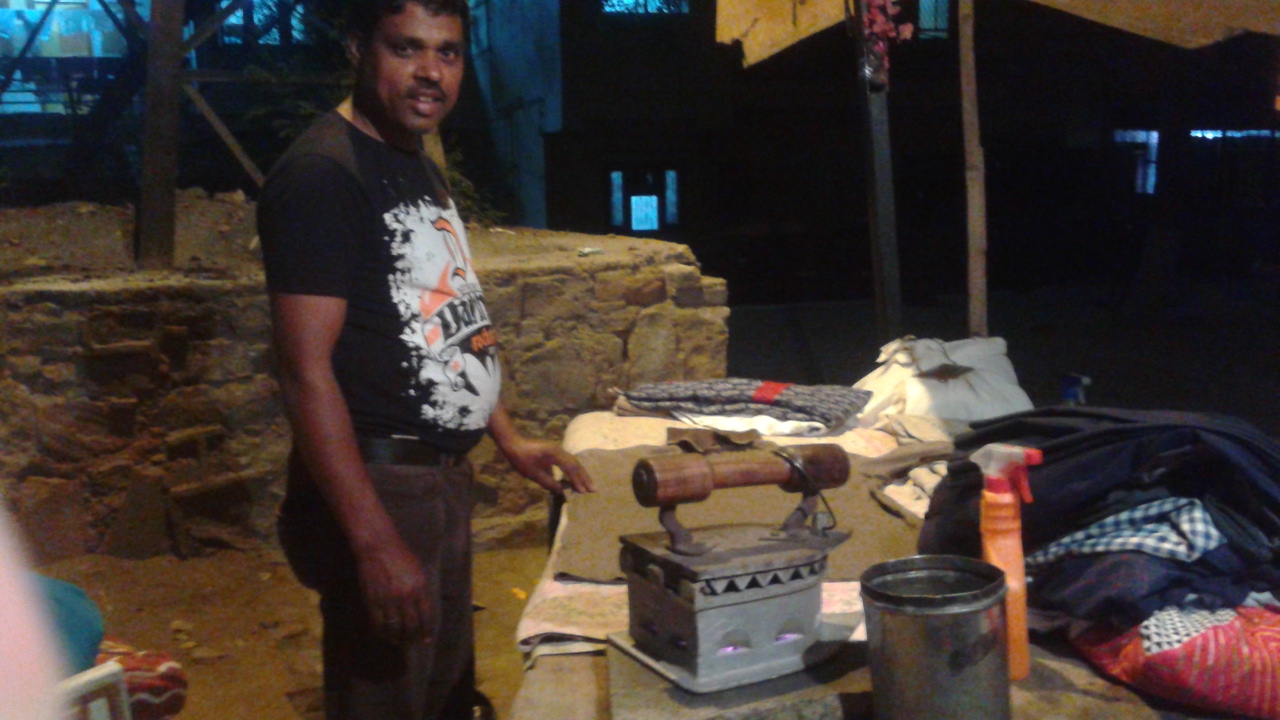
I didn’t grasp that he had no choice. Caste seemed, naively, like parents here passing on the family business to their kids. Many young people struggle to find a vocation and this seemed to have solved that—Indian society is so ordered because it’s predetermined. When people say that caste is the glue that binds the country, they must mean something like that.
Caste is practical, and does serve a purpose. That doesn’t make it ethical or acceptable! Far from! Ambedkar’s metaphor for caste was of a tower with no stairs or front door; residents live forever on whatever floor they’re born to. They can’t move up or leave. That the very thing taking away people’s basic freedoms is also the very glue holding the country together is what’s so troubling, and helps explain why so many people refuse to uproot it.
I got my shirts ironed for probably something like 10 rupees, 20 cents Canadian then. Dress clothes aside, I had never had my shirts ironed by someone else. To many, this arrangement is good.
My Radical Editor, T
When I think about caste I recall a conversation I had months later with my editor, still a very dear friend, Tathagata Bhattacharya. He’s a Brahmin, the highest caste, but he told me he doesn’t go for all that shit. “That’s easy for you to say!” I told him.
I thought I was being real. In my mind, nobody was pushing T to become a manual scavenger, cleaning feces in sewers without gloves or protective equipment. What I thought then was: caste is easy to denounce when nobody’s forcing it on you.
Of course it’s not that simple, I was dead wrong. Many upper caste Hindus genuinely don’t see that they benefit from systemic discrimination. They’ve fully internalized the caste system like fish who don’t know what water is because it’s so omnipresent. It’s what they breathe. It’s not necessarily that they’re going along with it, it’s that they think there’s nothing to go along with.
Like in many places, Indian society hides discrimination’s ugliest parts from sight, so its beneficiaries can enjoy it guilt-free. Caste is so baked into every aspect of society that pushing back against it is what’s considered radical because that means seeing it. Renouncing it and rejecting its privileges are rare. Going along with caste, refusing to acknowledge it, means going with the flow.
So now I appreciate how rare and great it was for an Indian editor to denounce caste. I was wrong to chirp T, even lightheartedly.
How did I land among an anti-caste editor in Zee Media, basically India’s Fox News? T is the son of the iconic and radical Bengali novelist, Nabarun Bhattacharya (Harbart is so excellent!), and the grandson of Mahasweta Devi, a legendary writer and activist. T’s radical pedigree helps explain his views on caste, even if he shares them with millions of Indians.
India’s political spectrum is vast, complex, and intensely regional. I was in New Delhi, the political capital in the North, which is nothing like Kerala, incidentally where Arundhati Roy is from, or Kolkata to the East, where T is from. Though upper castes do generally dominate discourse. My newsroom, like basically all newsrooms in India, was disproportionately composed of upper caste Indians.
WION, the international, English-language station where I worked, was extremely different in culture from Zee Hindi, especially the web desk where I was stationed. Liberal. Delhi journalists go through a revolving door of Film City news desks: News-18, NewsX, India Today, and NDTV. Apparently, WION was rare for having much less screaming at juniors. We were a tight knit group that had a very good time!
T had backbone about work matters, but never treated subordinates like he was above them. Personally, while growing up outside of India made me blind and distant to many aspects of caste, sometimes the distance makes you see things with clearer eyes, too.
Caste in the Office
Still, caste was far from eliminated. “Office boys” cleared away our glasses and mugs and ran newsroom errands. The systemic discrimination of caste exists alongside even the rosiest personal relationships; caste is about power, not how two people may get along. My attitude to the “office boys” was always laughing, despite the language barrier, but that isn’t the point.
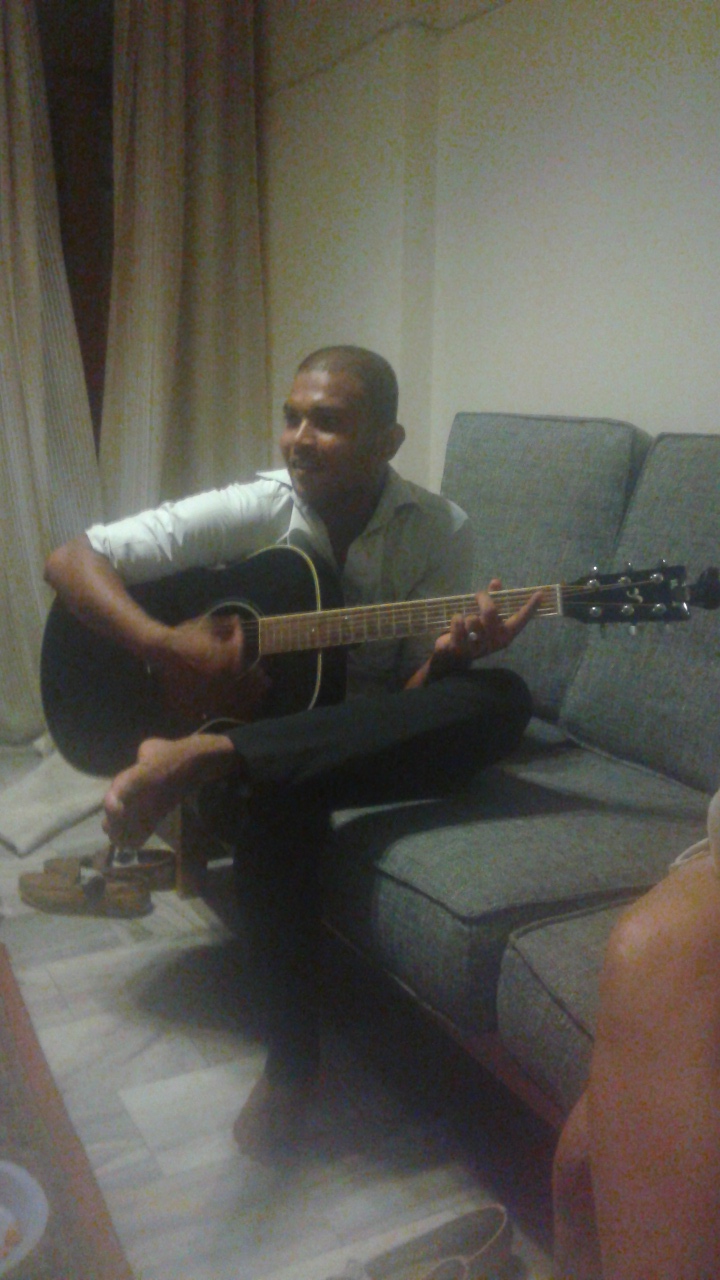
One time at an office party, which I hosted when I lived in the office guest house, I poured the “office boy” some whiskey and showed him some tunes on guitar. He was there to work, but still, it was a party in my home. For me that was ordinary, but I had the sense like I violated something. To my surprise, he gave me a friendly peck on the cheek! You see things like this in India. It’s also common for two guys to walk around holding hands platonically. It’s very surprising in this virulently homophobic country, and sweet!
None of this changes the fact that when I waltzed into this gentleman’s country, people saw me very differently than they did him. Power and personal dynamics are always distinct things. The point was never that everybody was mean or belittled them; it’s that if you had to bet on which caste the editor and the “office boys” came from, it’d be easy money.
You could just tell. “Office boys,” like many lower caste people, tended to be short, slight, and dark skinned. Last names signify caste, too. There are signs if you know how to see and hear them.
Caste dynamics weren’t only at play in the office among “office boys,” security guards, manual labourers, or drivers. Sometimes in the newsroom you’d hear someone rip into a younger journalist in a way that felt like it went beyond differences of opinion and reeked of caste, even if there was a professional pretext for the disagreement.
Maybe the caste system encourages clashes in other types of hierarchies, or makes people apt to adopt hierarchy in general. Some Indians bring unyielding caste attitudes to their workplace (which is anything but unrelated to caste) and look down on those below them in the pecking order, while being absolutely subservient to those above.
Of course non-Indians do this too! I don’t mean to single out Hindu Indians for being snobs or ass kissers. Caste also exists outside of Hinduism and India. It’s all quite complicated and hard to pin down.
Yashica Dutt is a Dalit and Dalit activist who writes for the New York Times. She’s great on this topic. A few years ago, California was considering being the first US state to explicitly ban caste discrimination. They didn’t. Caste moves with the diaspora. Anyone interested in understanding Caste more should read Dalits on the subject, or at least actual experts.
Undoing Caste
What should be done about caste, exactly? I’m not the person to speak to about the state of contemporary developments, I’ll just say people have disagreed for a long time. Indeed, Annihilation of Caste is Ambedkar disagreeing with Gandhi back in 1936, years before India became an independent country in 1947.
Ambedkar thought that caste needed to be entirely uprooted, unlike Gandhi and many others, who believed it could be accommodated for within the system. The liberal tendency is to believe in quotas or “scheduled castes,” basically affirmative action for historically disadvantaged groups. Upper caste conservatives want all affirmative action abolished for numerous reasons: tradition, identity, and “merit,” but in a way they conveniently seldom mention is self-serving—they are the “merit.” Radicals like Ambedkar want something outside of this equation entirely.
This echoes political discourse in the West and surely many other places. The root of just about all political disagreement is class, and caste is basically class, but actively formalized and forced. Annihilating caste requires a mental revolution, a mental backflip, in hundreds of millions of people. No wonder it’s so hard to bring about.
Cities vs Villages
It’s a cliché that caste is different in cities than in villages. I spent almost all my time in Delhi and can’t speak to it in rural contexts at all. But caste discrimination is found across India and even beyond, whether in subtle or grotesque form.
Arundhati Roy makes this point in her introductory essay (page 98) to Annihilation of Caste:
“Ambedkar believed that it was not just the stigma, the pollution—purity issues around untouchability, but caste itself that must be dismantled. The practice of untouchability, cruel as it was—the broom tied to the waist…was the performative ritualistic end of the practice of caste. The real violence of caste was the denial of entitlement: to land, to wealth, to knowledge, to equal opportunity.”
Roy references here the shocking practice of Dalits being forced to wear brooms around their waists, to sweep away their footsteps with each step lest someone of a higher caste foul themselves by walking in them. Yes, caste discrimination can really be that blatant! Some Western readers or those unfamiliar with caste may think opposing caste is only for a do-gooder trying to make an exhibition of their oh so lofty soul, when really, the discrimination can be so monstrously flagrant, they’d be in utter disbelief and up in arms too.
But Roy’s point, or really Ambedkar’s, is that caste must be dismantled because the heart of the scourge of caste is internal, even when the discrimination is this jaw-droppingly outrageous. For one thing, caste discrimination, the “denial of entitlement” mentioned above, is often internalized in both parties. It’s the air everyone breathes, even the victims.
Ambedkar’s Status Today
Roy observed that Ambedkar statues usually depict him holding a book, but it’s the Constitution of India, not Annihilation of Caste. Another of Roy’s observations has stuck with me, that the Brahmin Gandhi traded his suit for the dhoti to dress like the poorest of the poor, while the born-poor Dalit Ambedkar did the opposite, always donning a three-piece suit. Being born into wealth and power can makes a person feel inwardly assured of their role in society. They feel less of a need to look the part because they feel it. For Dalits, it’s the opposite.
I saw this myself. In Shimla in 2017, in addition to a very enormous Hanuman, I saw a large noble-looking statue of Gandhi, glorified as the “Father of the Nation.” Note, the statue didn’t need to actually say “Mahatma Gandhi.” In a less prominent location I found a smaller, less grand statue of “Baba Sahib Bhimrao Ambedkar” still surrounded by scaffolding.
Is that not typical?
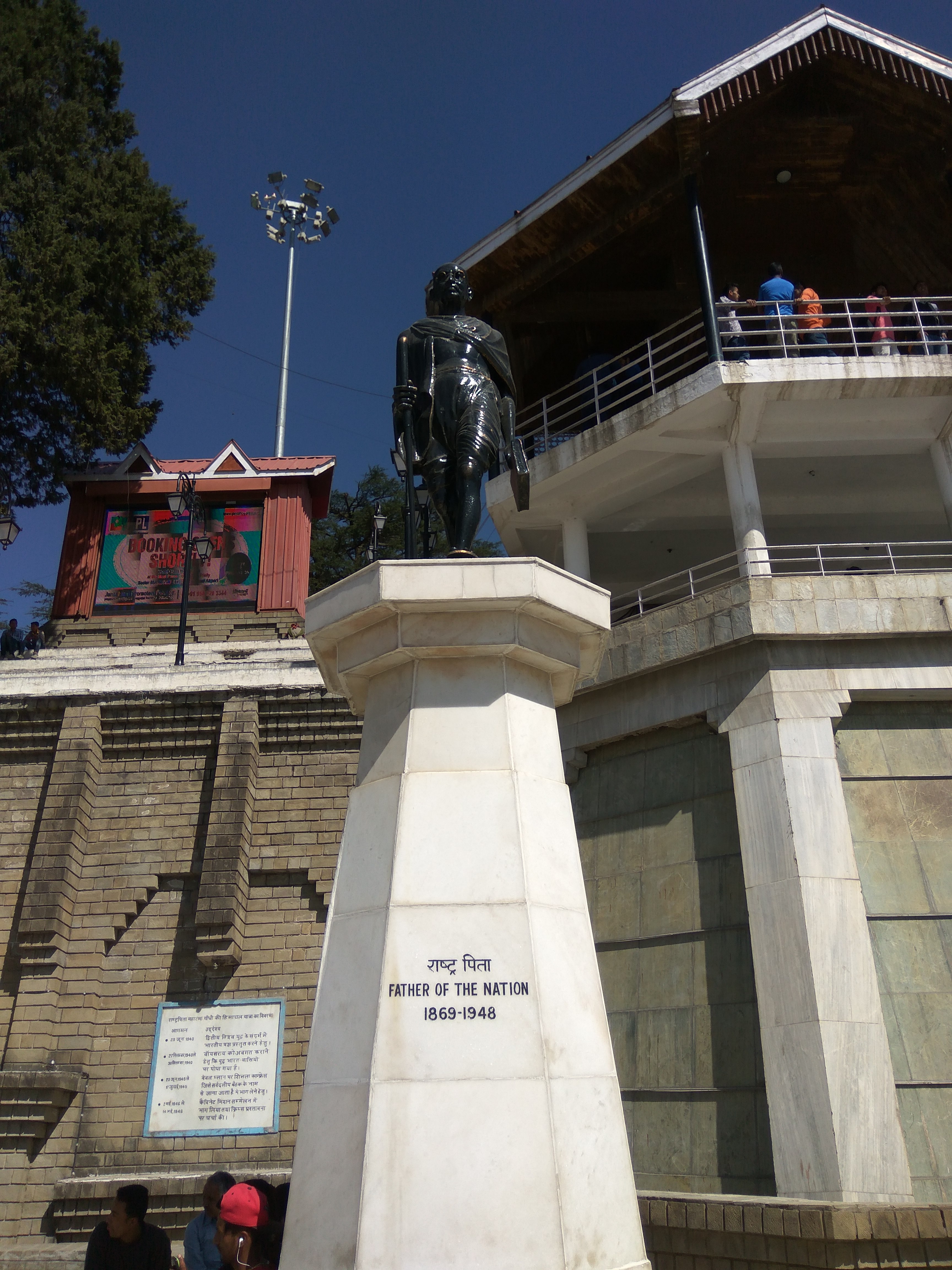
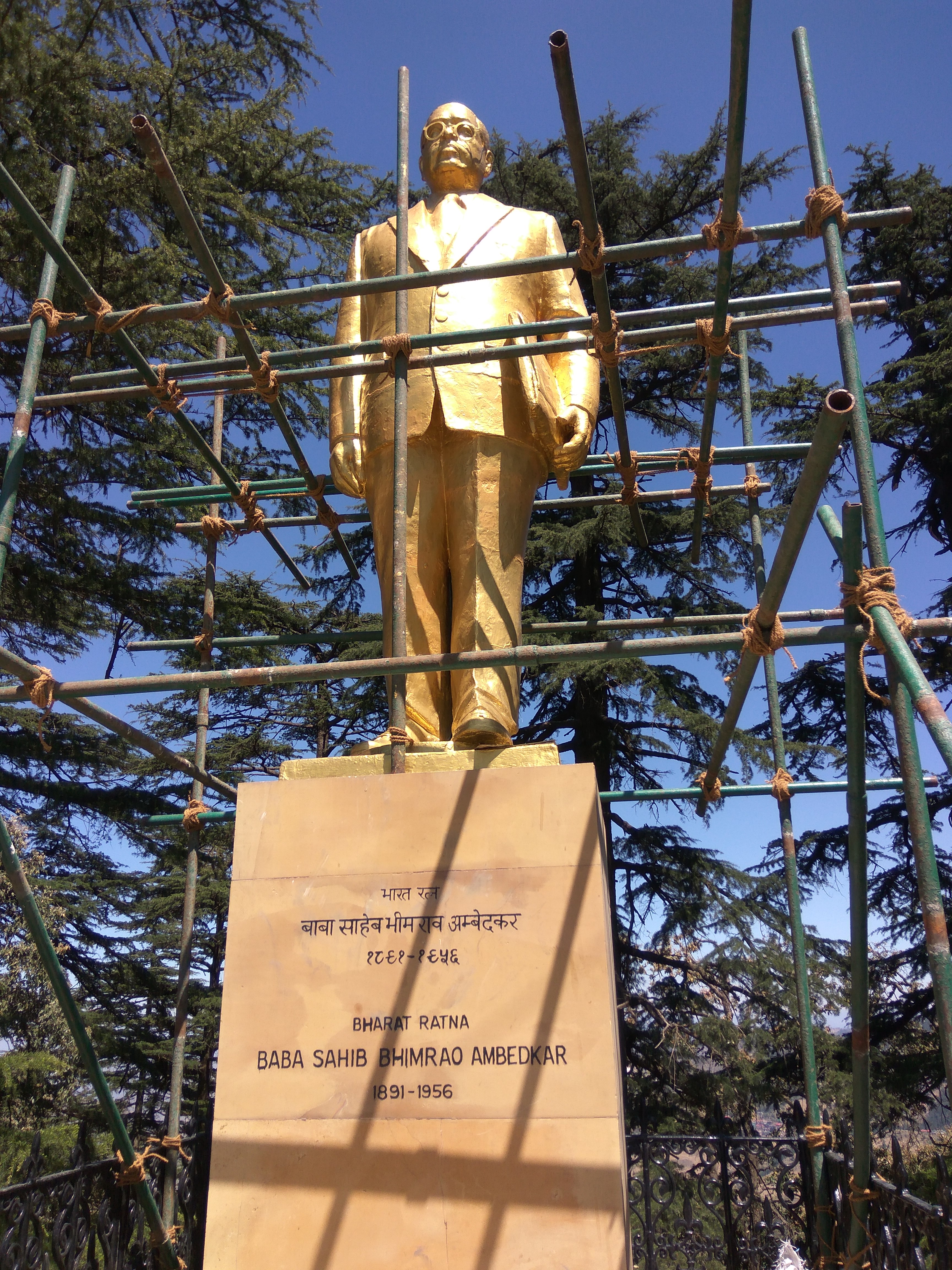
The modern cover of Annihilation of Caste reflects this same idea, Ambedkar in Gandhi’s shadow pointing an accusatory finger, contained within the image of Gandhi and all his overwhelming mythic power and global stature. Everybody knows who Gandhi is, even if they don’t really know his actual politics. In contrast, to put it lightly, Ben Kingsley didn’t win the Academy Award for Best Actor for portraying BR Ambedkar. Nehru and Jinnah were depicted in that three hour movie, but Ambedkar was left out altogether. He wasn’t even a supporting character.
My former ignorance about caste is sadly still all too common. I really hope that changes! I wish nothing but the best to anybody inside or outside India raising awareness about the great Ambedkar, and, of course, working to finally annihilate caste.

