• About the Author
  • Books
  • Vinyl
  • What the critics say about Jeff

Jeff Halperin

Jeff Halperin

Tag Archives: WION

Caste: My Comfortable Perspective on a Horror

16 Thursday Apr 2026

Posted by jdhalperin in Politics

≈ Leave a comment

Tags

BR Ambedkar, Caste, Jeff Halperin, Mahatma Gandhi, Tathagata Bhattacharya, WION

When I first got to India, I knew nothing about caste. Nothing. This is embarrassing to say now, because it’s a monstrous plague woven throughout Earth’s most populated country. There are over 200 million Dalits, or “untouchables.” Yet many North Americans know nothing about it. Many Indians don’t, either.

I confess: In my first weeks in India, I told a colleague that, not knowing what caste was, I suspended my judgement about it. She looked at me in horror. I get my reluctance to comment, but understand the horror in her face more. “Dalit” may be a vague term but “untouchables”?

I learned more about caste by observing, gradually. It didn’t dawn on me right away. The compound security guards, the night watchmen, my company’s drivers, my friend’s gardener Hera who sometimes pedalled me to work on his bike rickshaw…weren’t they all of lower caste, if not Dalits? At work, at the English-language news station, I was surrounded by English speakers. None of these people spoke English. I couldn’t talk to them.

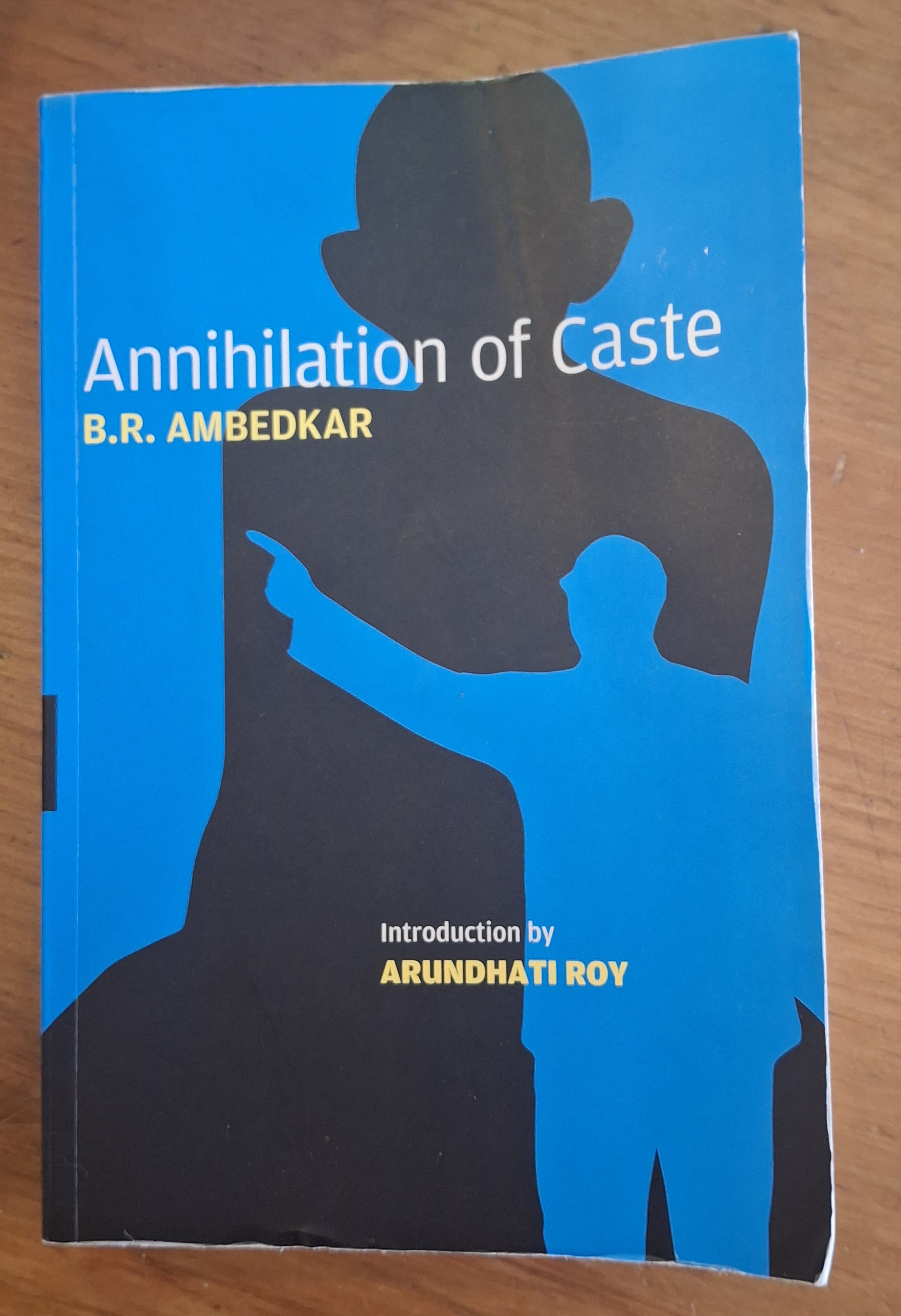
I also read about caste from a couple devastating books. The first was Annihilation of Caste by the great B.R. Ambedkar, a Dalit jurist, economist, and activist who was the chief architect of India’s Constitution. This book is actually a speech Ambedkar was supposed to deliver in Lahore about uprooting caste. The speech and long introductory essay by novelist Arundhati Roy do a thing that will shock many: criticize Mahatma Gandhi. Who was after all a politician, not just a martyr or saint.
The other book was Caste: The Origins of Our Discontent by Pulitzer-winning journalist, Isabel Wilkerson. This 2020 book compares India’s caste system to racist structures in the US and Nazi Germany. As a Jewish North American who spent time in India, the explicit links between these three things shocked me. My ignorance made me shudder. I get that, on one level, why would I know about caste when it isn’t talked about here? But that’s precisely what made me shudder.

I recommend reading these books but won’t get into either here too much. They’re quite overwhelming. For example, Arundhati Roy claims in her intro (page 24) there are about 4,000 endogamous castes and sub-castes in Hindu society, each with its own specified hereditary occupation. I knew about Brahmins and Dalits, but nearly 4,000 castes?

A funny thing happens to white people who spend time in India: you see and learn about many things so shocking you feel the need to discuss them, but there’s the overwhelming sense that you can’t fully understand what you’re seeing, which makes discussing it all difficult.

I can only scratch the surface when it comes to describing caste. This is anything but a full account, but I hope the following is accurate. With that in mind, here are some reflections based on my time there.

Seeing But Not Recognizing Caste

I didn’t explicitly hear about “caste” when I was first exposed to it, so I didn’t categorize it that way. My friend told me that the people ironing clothes in his sector with coal-filled charcoal irons descended from a long line of ironers.
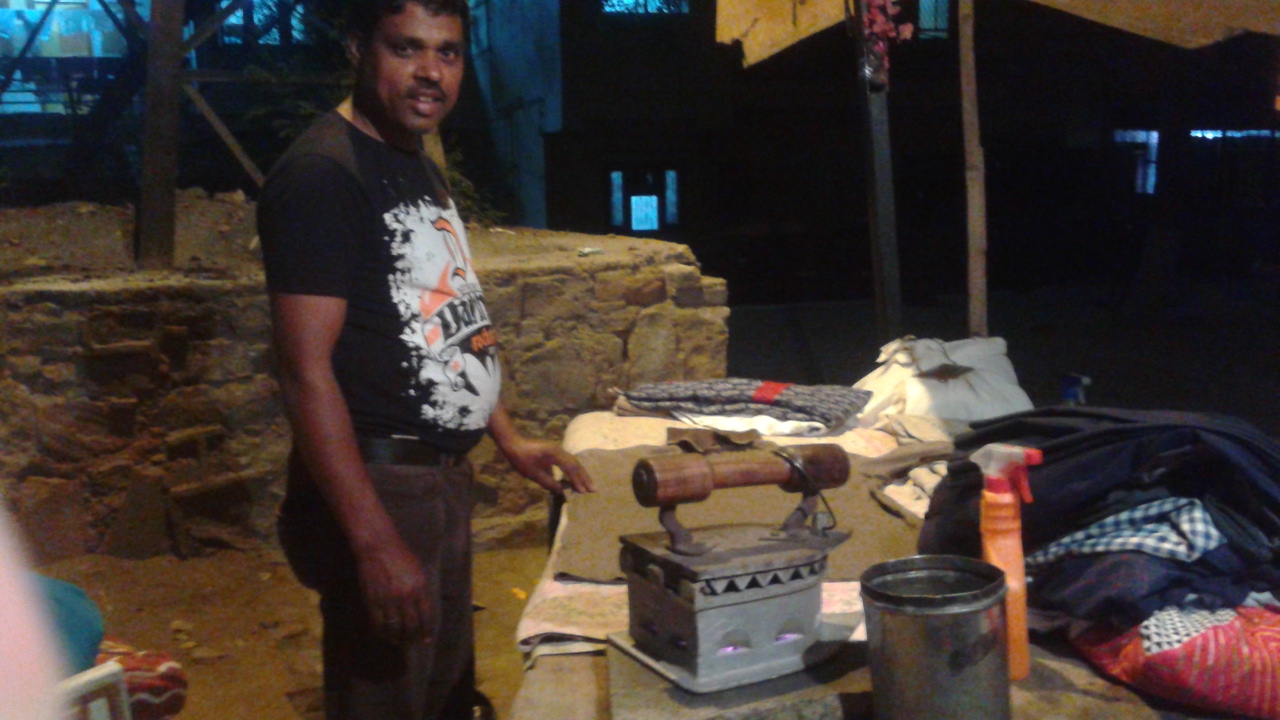
I didn’t grasp that he had no choice. Caste seemed, naively, like parents here passing on the family business to their kids. Many young people struggle to find a vocation and this seemed to have solved that—Indian society is so ordered because it’s predetermined. When people say that caste is the glue that binds the country, they must mean something like that.

Caste is practical, and does serve a purpose. That doesn’t make it ethical or acceptable! Far from! Ambedkar’s metaphor for caste was of a tower with no stairs or front door; residents live forever on whatever floor they’re born to. They can’t move up or leave. That the very thing taking away people’s basic freedoms is also the very glue holding the country together is what’s so troubling, and helps explain why so many people refuse to uproot it.

I got my shirts ironed for probably something like 10 rupees, 20 cents Canadian then. Dress clothes aside, I had never had my shirts ironed by someone else. To many, this arrangement is good.

My Radical Editor, T

When I think about caste I recall a conversation I had months later with my editor, still a very dear friend, Tathagata Bhattacharya. He’s a Brahmin, the highest caste, but he told me he doesn’t go for all that shit. “That’s easy for you to say!” I told him.

I thought I was being real. In my mind, nobody was pushing T to become a manual scavenger, cleaning feces in sewers without gloves or protective equipment. What I thought then was: caste is easy to denounce when nobody’s forcing it on you.

Of course it’s not that simple, I was dead wrong. Many upper caste Hindus genuinely don’t see that they benefit from systemic discrimination. They’ve fully internalized the caste system like fish who don’t know what water is because it’s so omnipresent. It’s what they breathe. It’s not necessarily that they’re going along with it, it’s that they think there’s nothing to go along with.

Like in many places, Indian society hides discrimination’s ugliest parts from sight, so its beneficiaries can enjoy it guilt-free. Caste is so baked into every aspect of society that pushing back against it is what’s considered radical because that means seeing it. Renouncing it and rejecting its privileges are rare. Going along with caste, refusing to acknowledge it, means going with the flow.

So now I appreciate how rare and great it was for an Indian editor to denounce caste. I was wrong to chirp T, even lightheartedly.

How did I land among an anti-caste editor in Zee Media, basically India’s Fox News? T is the son of the iconic and radical Bengali novelist, Nabarun Bhattacharya (Harbart is so excellent!), and the grandson of Mahasweta Devi, a legendary writer and activist. T’s radical pedigree helps explain his views on caste, even if he shares them with millions of Indians.

India’s political spectrum is vast, complex, and intensely regional. I was in New Delhi, the political capital in the North, which is nothing like Kerala, incidentally where Arundhati Roy is from, or Kolkata to the East, where T is from. Though upper castes do generally dominate discourse. My newsroom, like basically all newsrooms in India, was disproportionately composed of upper caste Indians.

WION, the international, English-language station where I worked, was extremely different in culture from Zee Hindi, especially the web desk where I was stationed. Liberal. Delhi journalists go through a revolving door of Film City news desks: News-18, NewsX, India Today, and NDTV. Apparently, WION was rare for having much less screaming at juniors. We were a tight knit group that had a very good time!

T had backbone about work matters, but never treated subordinates like he was above them. Personally, while growing up outside of India made me blind and distant to many aspects of caste, sometimes the distance makes you see things with clearer eyes, too.

Caste in the Office

Still, caste was far from eliminated. “Office boys” cleared away our glasses and mugs and ran newsroom errands. The systemic discrimination of caste exists alongside even the rosiest personal relationships; caste is about power, not how two people may get along. My attitude to the “office boys” was always laughing, despite the language barrier, but that isn’t the point.

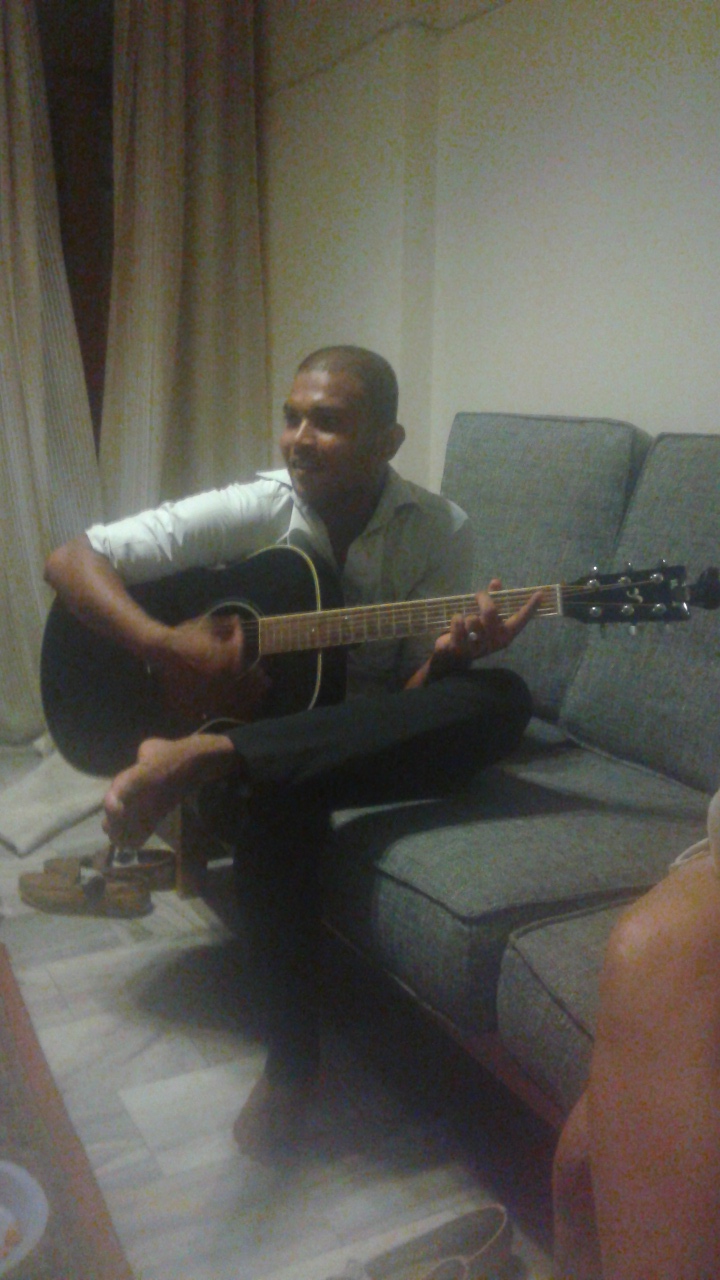
One time at an office party, which I hosted when I lived in the office guest house, I poured the “office boy” some whiskey and showed him some tunes on guitar. He was there to work, but still, it was a party in my home. For me that was ordinary, but I had the sense like I violated something. To my surprise, he gave me a friendly peck on the cheek! You see things like this in India. It’s also common for two guys to walk around holding hands platonically. It’s very surprising in this virulently homophobic country, and sweet!
None of this changes the fact that when I waltzed into this gentleman’s country, people saw me very differently than they did him. Power and personal dynamics are always distinct things. The point was never that everybody was mean or belittled them; it’s that if you had to bet on which caste the editor and the “office boys” came from, it’d be easy money.

You could just tell. “Office boys,” like many lower caste people, tended to be short, slight, and dark skinned. Last names signify caste, too. There are signs if you know how to see and hear them.

Caste dynamics weren’t only at play in the office among “office boys,” security guards, manual labourers, or drivers. Sometimes in the newsroom you’d hear someone rip into a younger journalist in a way that felt like it went beyond differences of opinion and reeked of caste, even if there was a professional pretext for the disagreement.

Maybe the caste system encourages clashes in other types of hierarchies, or makes people apt to adopt hierarchy in general. Some Indians bring unyielding caste attitudes to their workplace (which is anything but unrelated to caste) and look down on those below them in the pecking order, while being absolutely subservient to those above.

Of course non-Indians do this too! I don’t mean to single out Hindu Indians for being snobs or ass kissers. Caste also exists outside of Hinduism and India. It’s all quite complicated and hard to pin down.

Yashica Dutt is a Dalit and Dalit activist who writes for the New York Times. She’s great on this topic. A few years ago, California was considering being the first US state to explicitly ban caste discrimination. They didn’t. Caste moves with the diaspora. Anyone interested in understanding Caste more should read Dalits on the subject, or at least actual experts.

Undoing Caste

What should be done about caste, exactly? I’m not the person to speak to about the state of contemporary developments, I’ll just say people have disagreed for a long time. Indeed, Annihilation of Caste is Ambedkar disagreeing with Gandhi back in 1936, years before India became an independent country in 1947.

Ambedkar thought that caste needed to be entirely uprooted, unlike Gandhi and many others, who believed it could be accommodated for within the system. The liberal tendency is to believe in quotas or “scheduled castes,” basically affirmative action for historically disadvantaged groups. Upper caste conservatives want all affirmative action abolished for numerous reasons: tradition, identity, and “merit,” but in a way they conveniently seldom mention is self-serving—they are the “merit.” Radicals like Ambedkar want something outside of this equation entirely.

This echoes political discourse in the West and surely many other places. The root of just about all political disagreement is class, and caste is basically class, but actively formalized and forced. Annihilating caste requires a mental revolution, a mental backflip, in hundreds of millions of people. No wonder it’s so hard to bring about.

Cities vs Villages

It’s a cliché that caste is different in cities than in villages. I spent almost all my time in Delhi and can’t speak to it in rural contexts at all. But caste discrimination is found across India and even beyond, whether in subtle or grotesque form.

Arundhati Roy makes this point in her introductory essay (page 98) to Annihilation of Caste:

“Ambedkar believed that it was not just the stigma, the pollution—purity issues around untouchability, but caste itself that must be dismantled. The practice of untouchability, cruel as it was—the broom tied to the waist…was the performative ritualistic end of the practice of caste. The real violence of caste was the denial of entitlement: to land, to wealth, to knowledge, to equal opportunity.”

Roy references here the shocking practice of Dalits being forced to wear brooms around their waists, to sweep away their footsteps with each step lest someone of a higher caste foul themselves by walking in them. Yes, caste discrimination can really be that blatant! Some Western readers or those unfamiliar with caste may think opposing caste is only for a do-gooder trying to make an exhibition of their oh so lofty soul, when really, the discrimination can be so monstrously flagrant, they’d be in utter disbelief and up in arms too.

But Roy’s point, or really Ambedkar’s, is that caste must be dismantled because the heart of the scourge of caste is internal, even when the discrimination is this jaw-droppingly outrageous. For one thing, caste discrimination, the “denial of entitlement” mentioned above, is often internalized in both parties. It’s the air everyone breathes, even the victims. 

Ambedkar’s Status Today

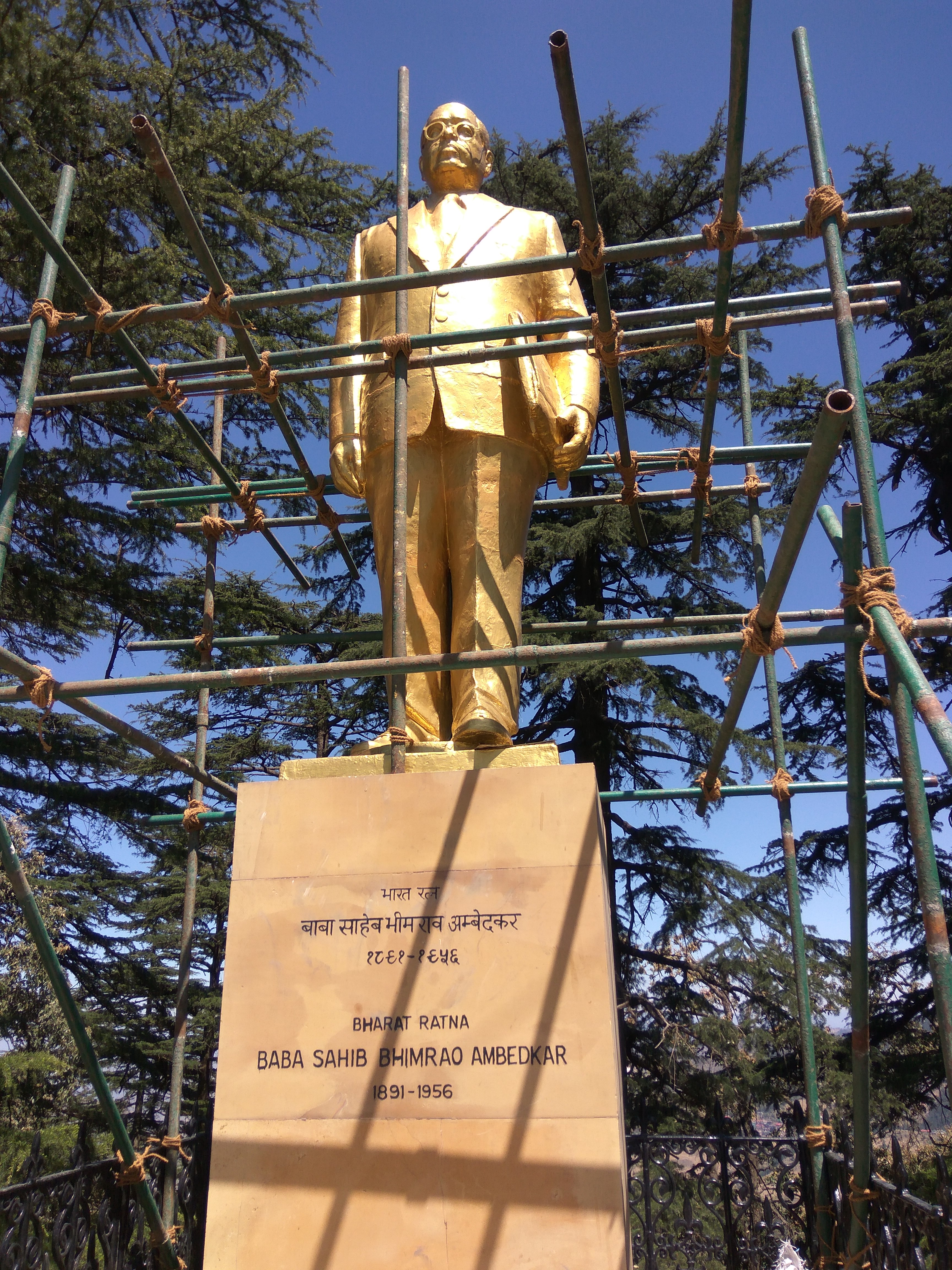
Roy observed that Ambedkar statues usually depict him holding a book, but it’s the Constitution of India, not Annihilation of Caste. Another of Roy’s observations has stuck with me, that the Brahmin Gandhi traded his suit for the dhoti to dress like the poorest of the poor, while the born-poor Dalit Ambedkar did the opposite, always donning a three-piece suit. Being born into wealth and power can makes a person feel inwardly assured of their role in society. They feel less of a need to look the part because they feel it. For Dalits, it’s the opposite.

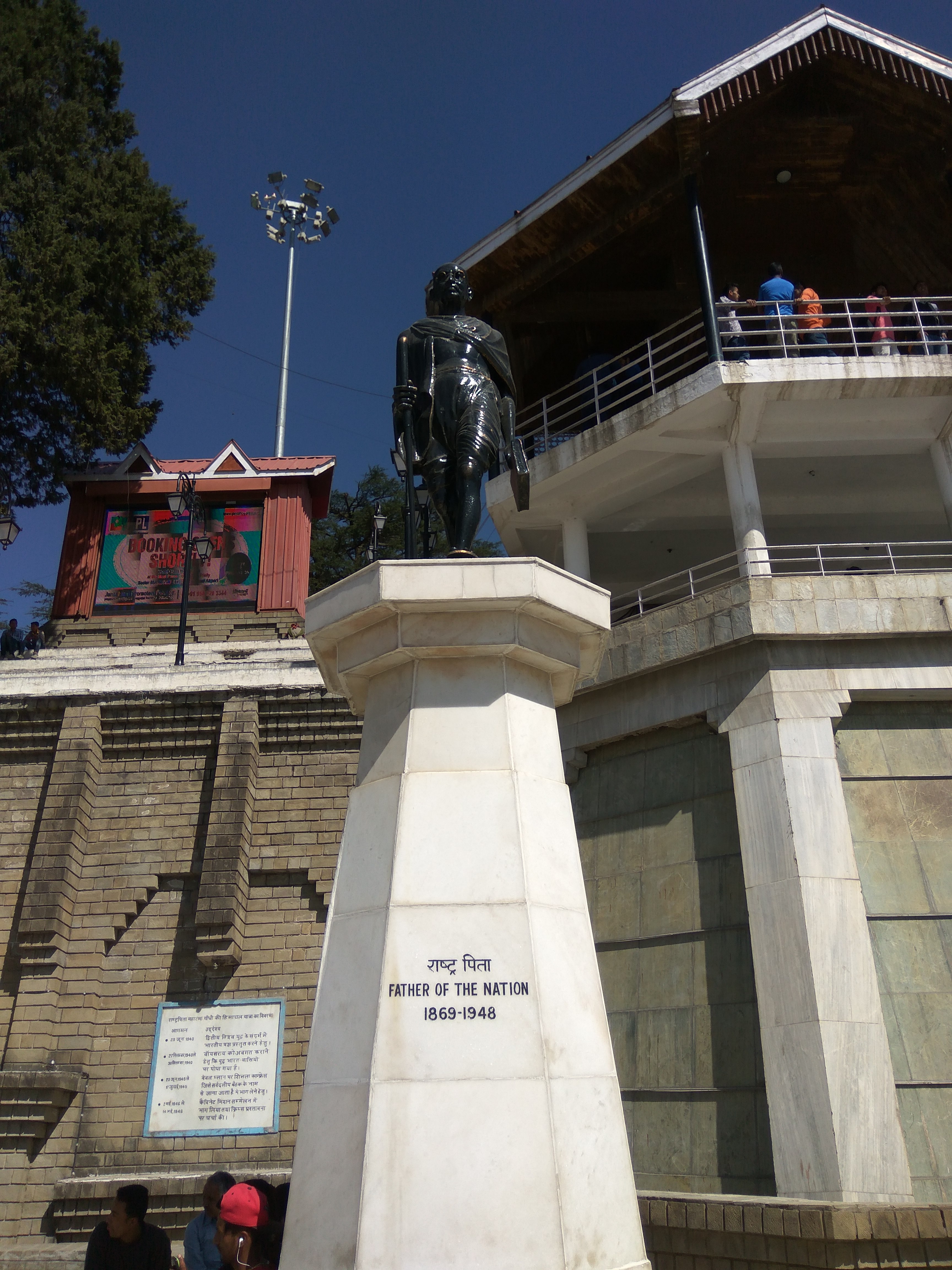
I saw this myself. In Shimla in 2017, in addition to a very enormous Hanuman, I saw a large noble-looking statue of Gandhi, glorified as the “Father of the Nation.” Note, the statue didn’t need to actually say “Mahatma Gandhi.” In a less prominent location I found a smaller, less grand statue of “Baba Sahib Bhimrao Ambedkar” still surrounded by scaffolding.

Is that not typical?
The modern cover of Annihilation of Caste reflects this same idea, Ambedkar in Gandhi’s shadow pointing an accusatory finger, contained within the image of Gandhi and all his overwhelming mythic power and global stature. Everybody knows who Gandhi is, even if they don’t really know his actual politics. In contrast, to put it lightly, Ben Kingsley didn’t win the Academy Award for Best Actor for portraying BR Ambedkar. Nehru and Jinnah were depicted in that three hour movie, but Ambedkar was left out altogether. He wasn’t even a supporting character.

My former ignorance about caste is sadly still all too common. I really hope that changes! I wish nothing but the best to anybody inside or outside India raising awareness about the great Ambedkar, and, of course, working to finally annihilate caste.
Demonetization and the 2016 US Election

06 Friday Feb 2026

Posted by jdhalperin in Uncategorized

≈ Leave a comment

Tags

2016 US elections, Demonetization, India, Malana, Pushkar, travel, trump, WION

You already know the results of the 2016 US election but I promise you, my perspective on it was entirely different. Most North Americans don’t know what “demonetization” in India even was, which began that very night. These are really two interconnected stories, both of which were shocking.

In 2016, I was the lone North American on the WION web desk, so it fell to me to write about the US election for the site. The week leading up to the election, I volunteered to work the graveyard shift, 10pm-7am, to be in synch with North American time. 11pm Delhi time is 9:30am in North America. That way, the website would have news as it unfolded.

The evening of the US election, the entire team volunteered to stay up all night on the graveyard shift. As major as that US election was, that wasn’t the major news story of the evening: at around 9pm, without any warning, the Modi government announced that 87% of the paper bills in circulation would suddenly no longer be accepted as payment, starting at midnight. This was known as “demonetization.”

People’s cash wasn’t suddenly valueless, but they had to swap their old 500 ($10 Cdn, roughly) and 1,000 rupee notes ($20) to their bank, and if the total money was over a certain amount, explain how they got them. But people couldn’t use their old bills to make purchases.The government issued new 500 notes and phased out the 1,000 rupee bill altogether. 10, 20, 50, and 100 rupee notes would still be acceptable.

Nobody in a country of 1.3 billion people saw this coming! People panicked. A lot. Whatever the rules were for what to do next, they weren’t immediately clear to all. The justifications for such a massive, drastic policy also kept shifting in the days to come.

First, demonetization was to crack down on terrorism. Supposedly, terrorists would have all these old bills they couldn’t launder, couldn’t explain to a bank how they got them. Next, it became about cracking down on black money and tax avoidance. Shady industrialists were supposedly the target.

Then it became about transitioning people into using the banking system and digital payments. When Big Business comes to India for its enormous middle-class, they expected people to pay via tap, rather than submit crumpled rupee notes. Along these lines, in addition to a new 500 rupee bill, India issued a brand new note of a higher denomination, 2,000 rupees ($40 Canadian).

The web team’s all-nighter to cover the US election was thrown for a loop, as this mammoth national story overtook it. That wasn’t the last surprise of the evening.

So maybe around 6am, my editor and good buddy Tathagata and I went down to the caf to get the team some snacks. Of course there was a problem; we had invalid bills! Right.

We had been covering demonetization for hours, but what was happening didn’t really hit until we went to pay for something and it affected us. I scrounged up my last hundred rupee notes to buy some egg bhuji, shaking my head. Suddenly I was living in a very different world.

Then minutes later I got upstairs and they announced Trump won the election. Suddenly I was living in a very different world. Holy shit. This is 2026 now, we’ve all lived through some truly shocking events, but right then, I’ve never had the rug pulled out from under me like that. It was a double whammy, back to back shots, each punch seismic.

Colleagues wondered why I looked so devastated. I wasn’t crying, but I had been following Trump closely from the start of his campaign, and frankly you didn’t need to to know the world would never be the same again. Anybody could tell Trump was a cerified fascist just from the way he decorated his living room.

I couldn’t take it and left the building. I really couldn’t be there anymore, writing stories like things were normal. It had been the end of a very long week and I was heading into a couple days off and decided I absolutely needed to take them now.

Grim news aside, working from 5am-2pm in one rotation, then 2-11pm, only to work the graveyard shift will turn anybody’s circadian rhythm upside down at the best of times, especially because my friends and family back in Canada were 10.5 hours behind me at any given moment, adding another dimension of disorientation.

I needed to get away. As it happened, I had recently gone out with a sweet girl I met on Tinder who told me she also wanted to get away for a bit, to Ajmer and Pushkar, Rajasthan. It was the Camel Fair, an enormous annual festival where people from across India assemble with their livestock and camel decorations and much else. It was settled, we’d go together.

One practical question first though was, how to get money? India relied overwhelmingly on cash, which meant vendors couldn’t necessarily accept debit or credit card. I only had so much cash and getting more was the question of the day.

In the first days of demonetization, everybody was desperate for cash. No joke, people lined up for days at ATMs, there were reports of some people even dying right there in line because they had medical problems but couldn’t leave their spot–they needed money. It was desperate. You might wait for hours for an ATM to get cash, but the government limited how much you could withdraw at a time to 2,000 rupees. When an ATM did finally get cash, in places, the rush was like those old clips of Black Friday at the mall.

An Uber might be way more expensive than an auto rickshaw, but you could pay through the app, not cash. It was worth spending more money if it meant keeping cash on hand for essentials that required cash. This was a privileged position, a very rarified adjustment compared to what other people in India faced, but it’s what I was navigating.

Anyway, Gopika told me she was starting to kind of date somebody and was it OK if he came on the trip too? Sure, I told her I didn’t care. We had been on one date I enjoyed, but that was fine with me. When you’re working abroad it’s nice to hang with non-colleagues and get away from office gossip and shop talk, especially then. Companionship aside, it’s also nice to travel with people who speak the language and know the deal.

But when that dude found out I was coming too, he didn’t want to anymore, so in the end it was just the two of us.

First Escape: Rajasthan–Ajmer, Pushkar

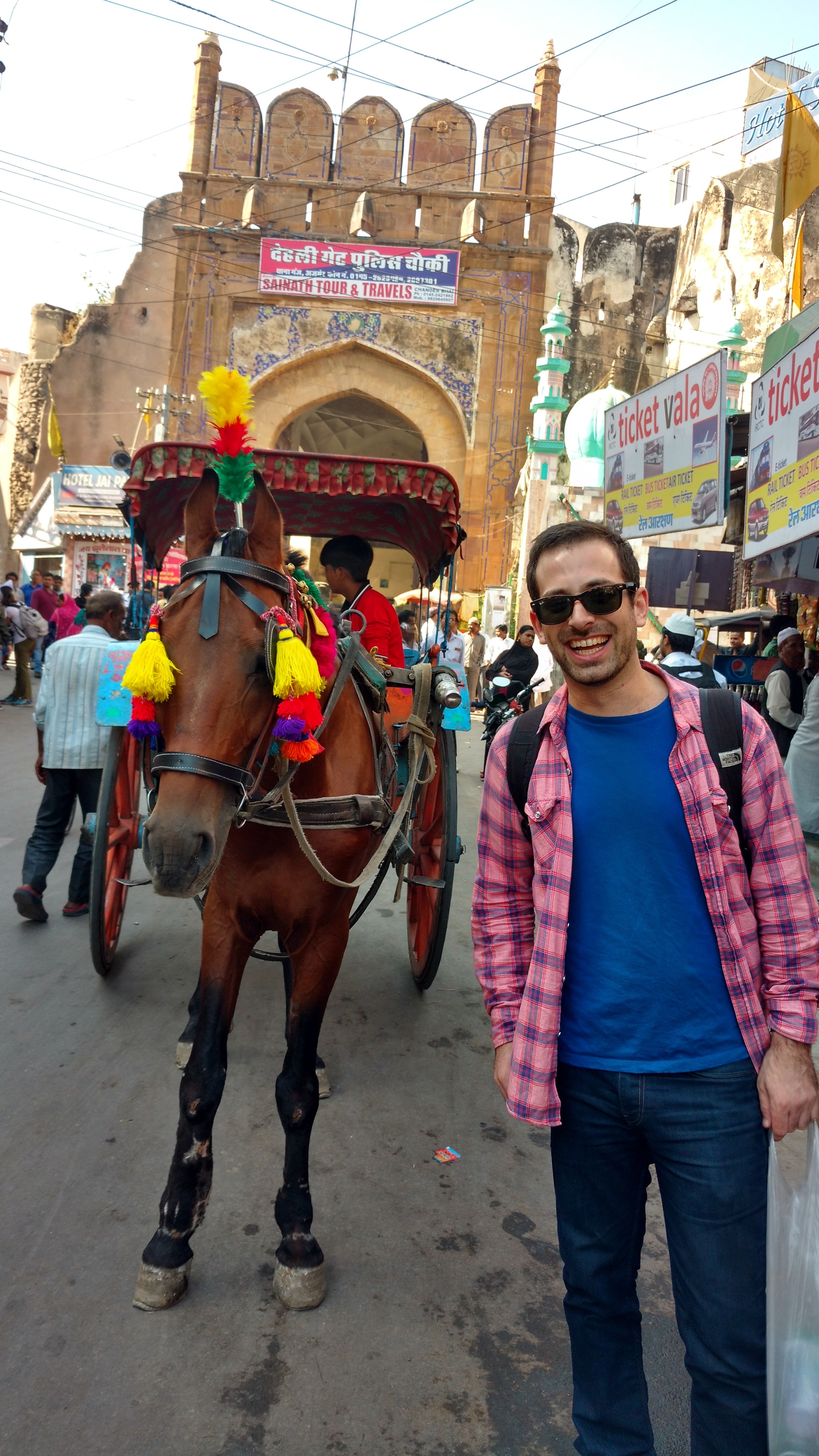
I met her in Gurgaon, (“Gurugram” now, since Modi de-Islamified the names of Indian cities,) and we took an overnight bus to Ajmer. Walking around that place in the morning was wild! When you touch down in India, you equate the first place you land as “India” because it’s your first exposure to the country, but India’s impossibly vast, places are radically different from each other, and they’re all “India.”

Rajasthan was so arid, the animals felt closer in the streets and different. I didn’t realize that I had a grasp on what kind of cows Delhi had until I saw the strangeness of other cows and bulls here, and one really gnarly wild boar just walking around. It was November, so it wasn’t hot out. Winters in India are what summers are here, the pleasant time to be outside.

I also laughed seeing a dude wearing a “Bury Me In My Ones” t-shirt with a Nike Swoosh, which a curated vintage store here could sell for $100+. It’s hard to explain this and I don’t mean to sound judgey, but I sensed this fella was not a hip dude aware that he was rocking vintage 90s streetwear. I doubted that he knew what Air Force Ones were. He just had a killer North American t-shirt that somehow ended up in India, like a lot of clothes. Western clothing brands get recontextualized there in a way I really like. Once I saw a woman on the Delhi subway with a bag bearing Prada and Gucci labels.

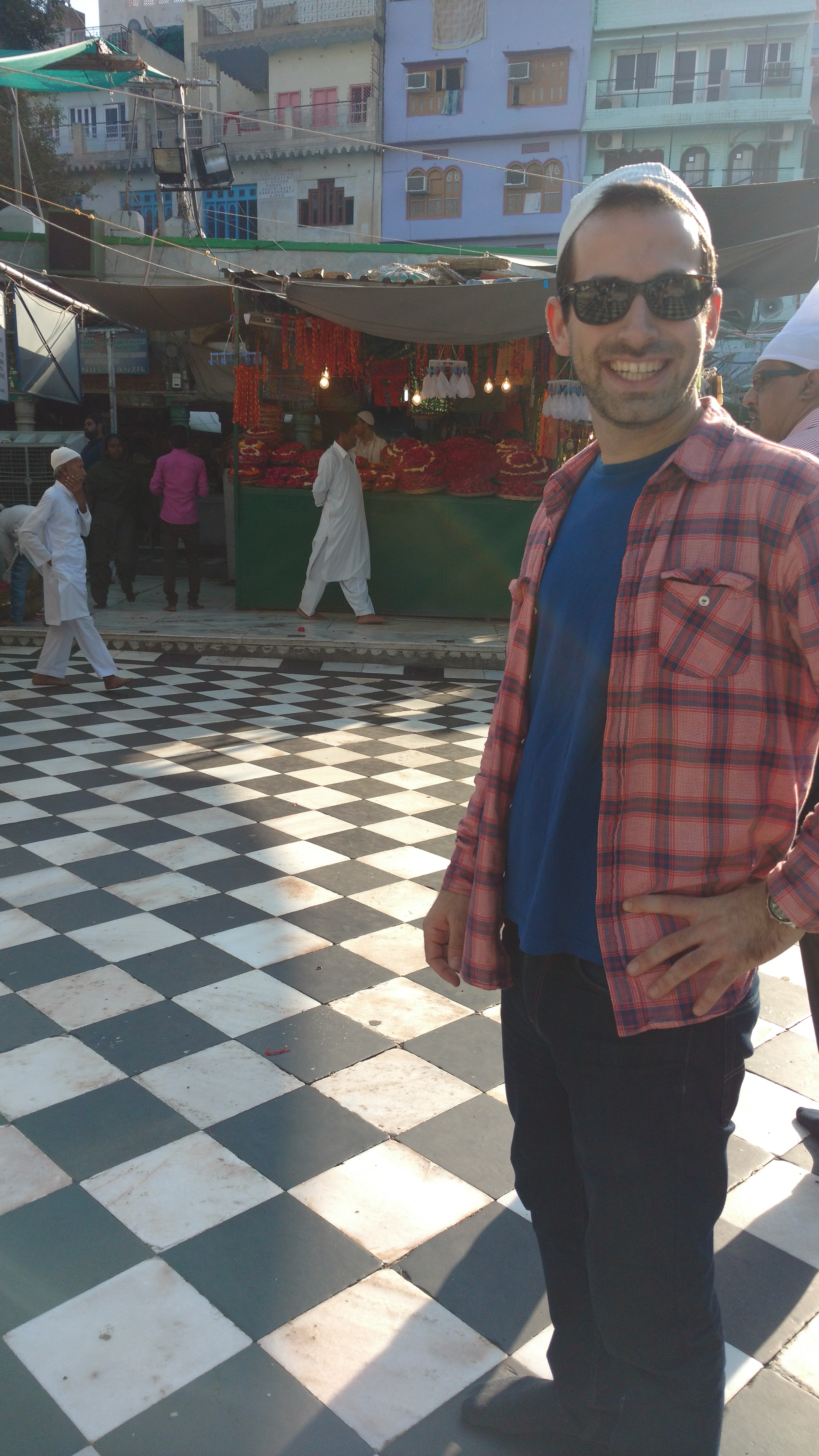
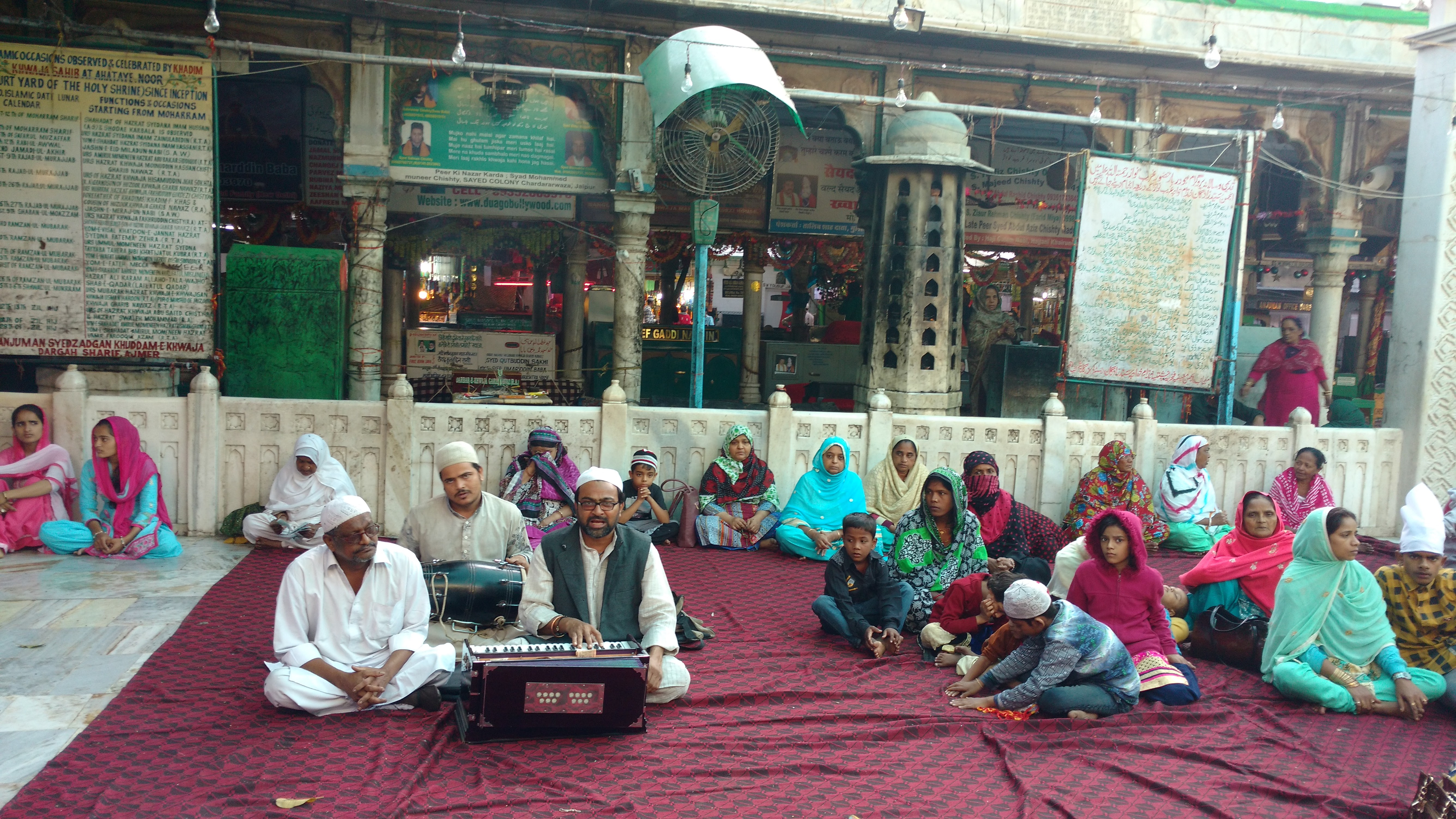
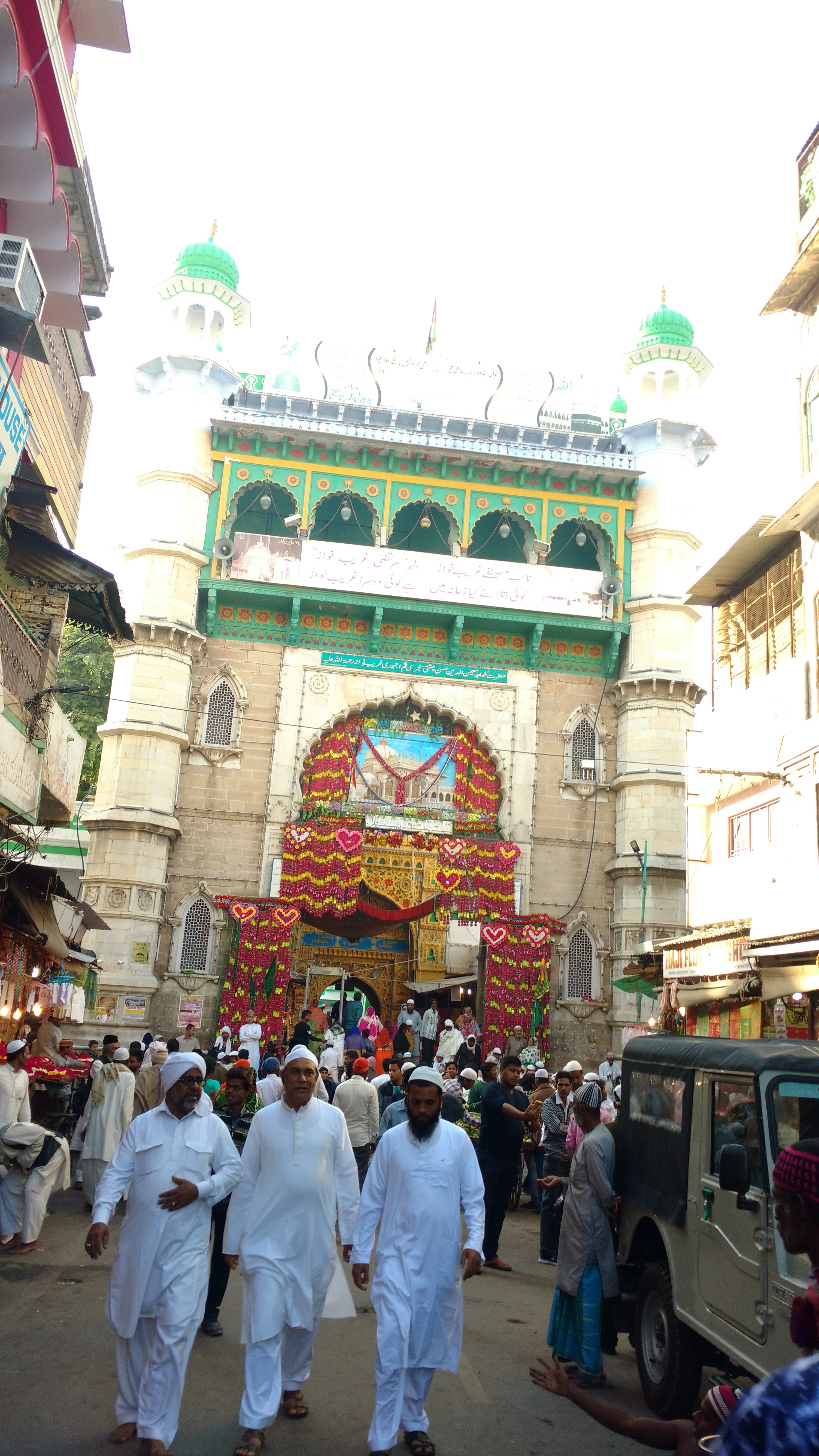
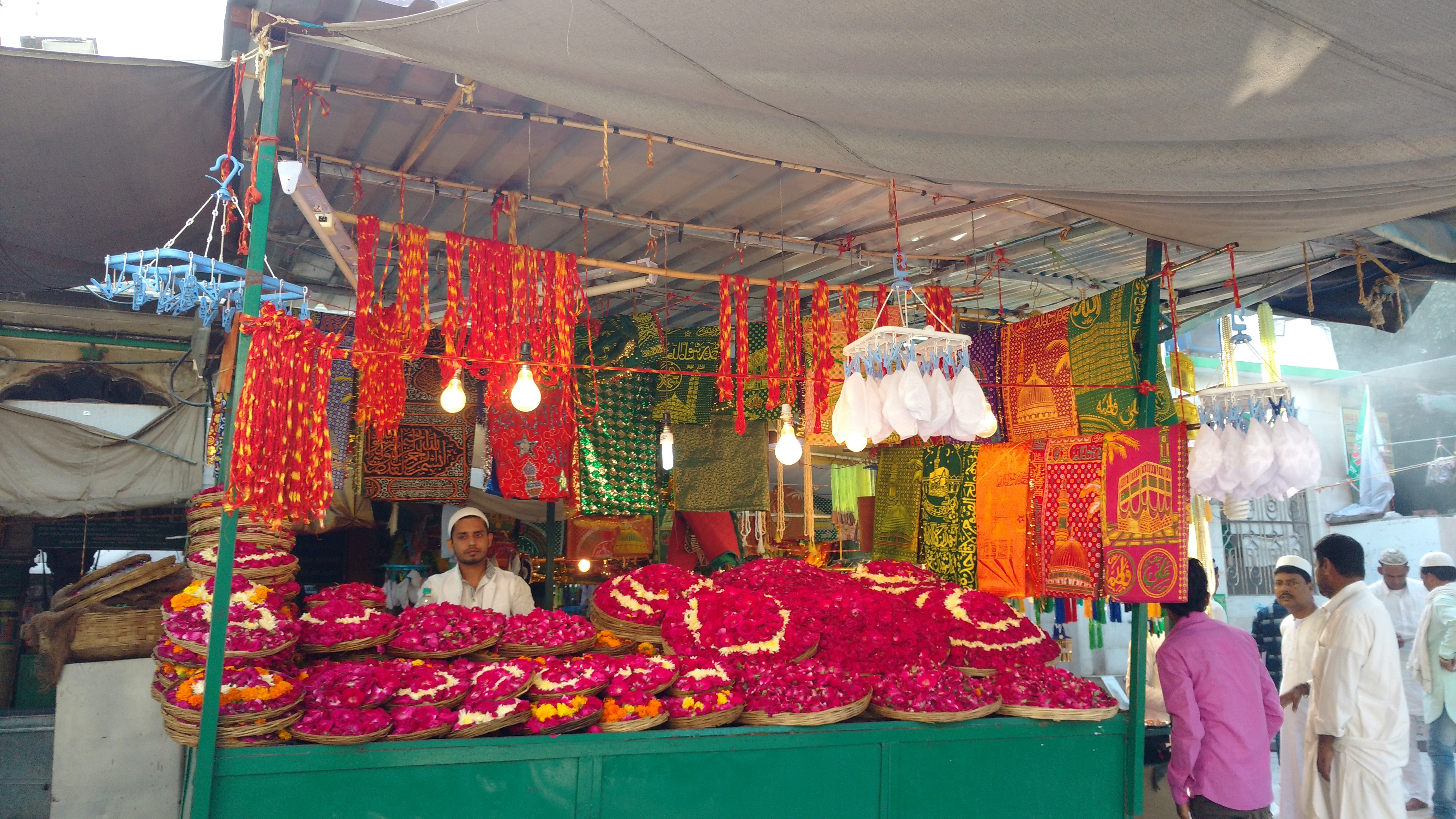
Anyway I loved Ajmer and was quite in awe. We went to a famous, beautiful mosque. You feel the hum that comes with being in an old, sacred place where people do today what they’ve done for many years.

You don’t always need a detailed history of what you’re looking at it to feel this hum. I’m not excusing ignorance, just you’ll never understand everything when you travel, and succumbing to the pressure of trying to is futile. I’ve learned to just enjoy it without needing a tour guide type of explanation for it all. The musicians in the mosque playing the harmonium and percussions were really cool.

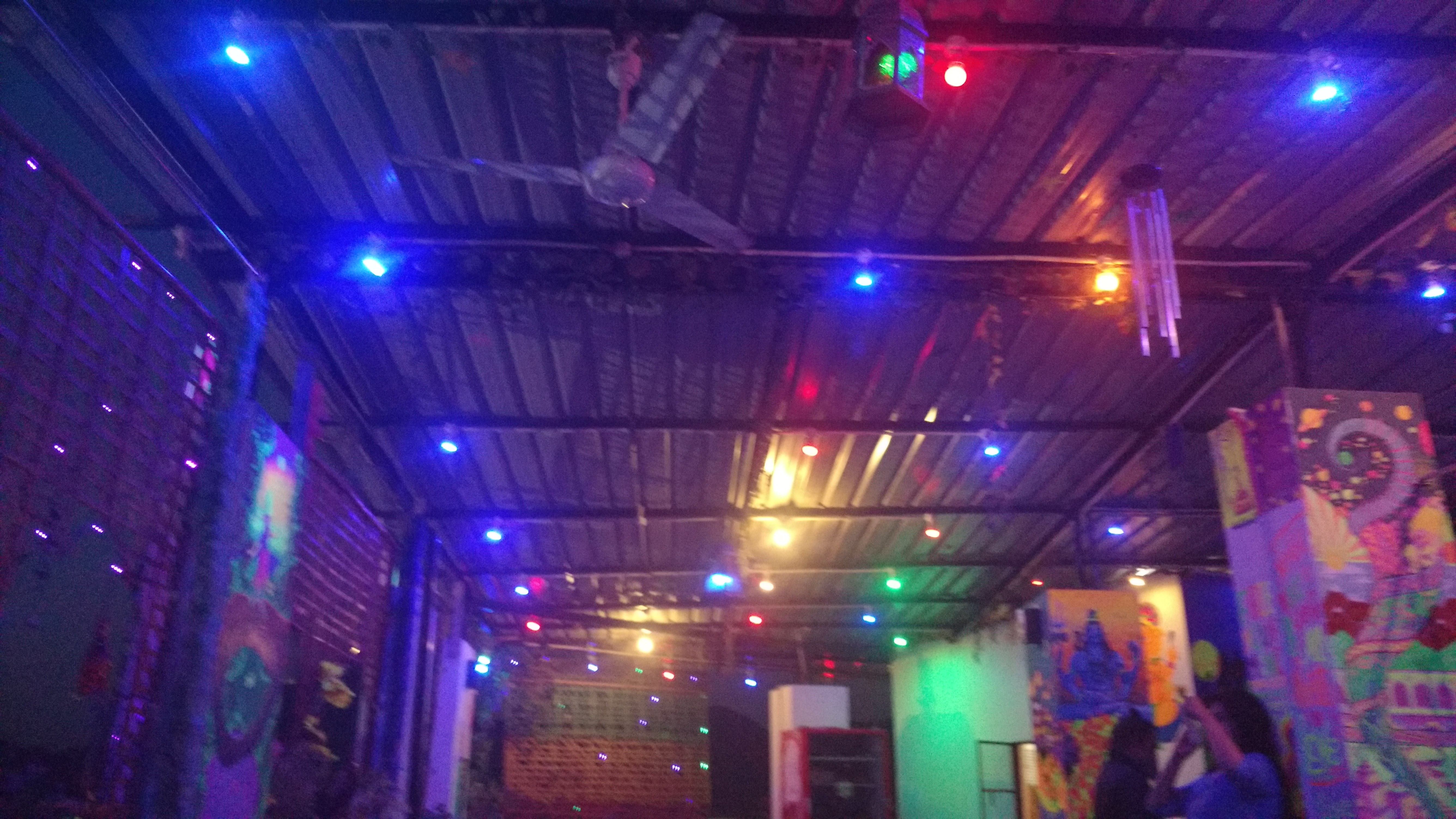
We got to Pushkar later that day and stayed at the Pink Floyd hotel. It was a rock and roll themed place with none of Delhi’s buttoned-up culture. Things were loose, very loose. I explained to the proprietor that because of demonetization, I didn’t have much cash, but I was on the lookout for more. “No problem,” he replied, “we’ve got lots of hash here, man.” That was like the one time in my life that really wasn’t what I meant.

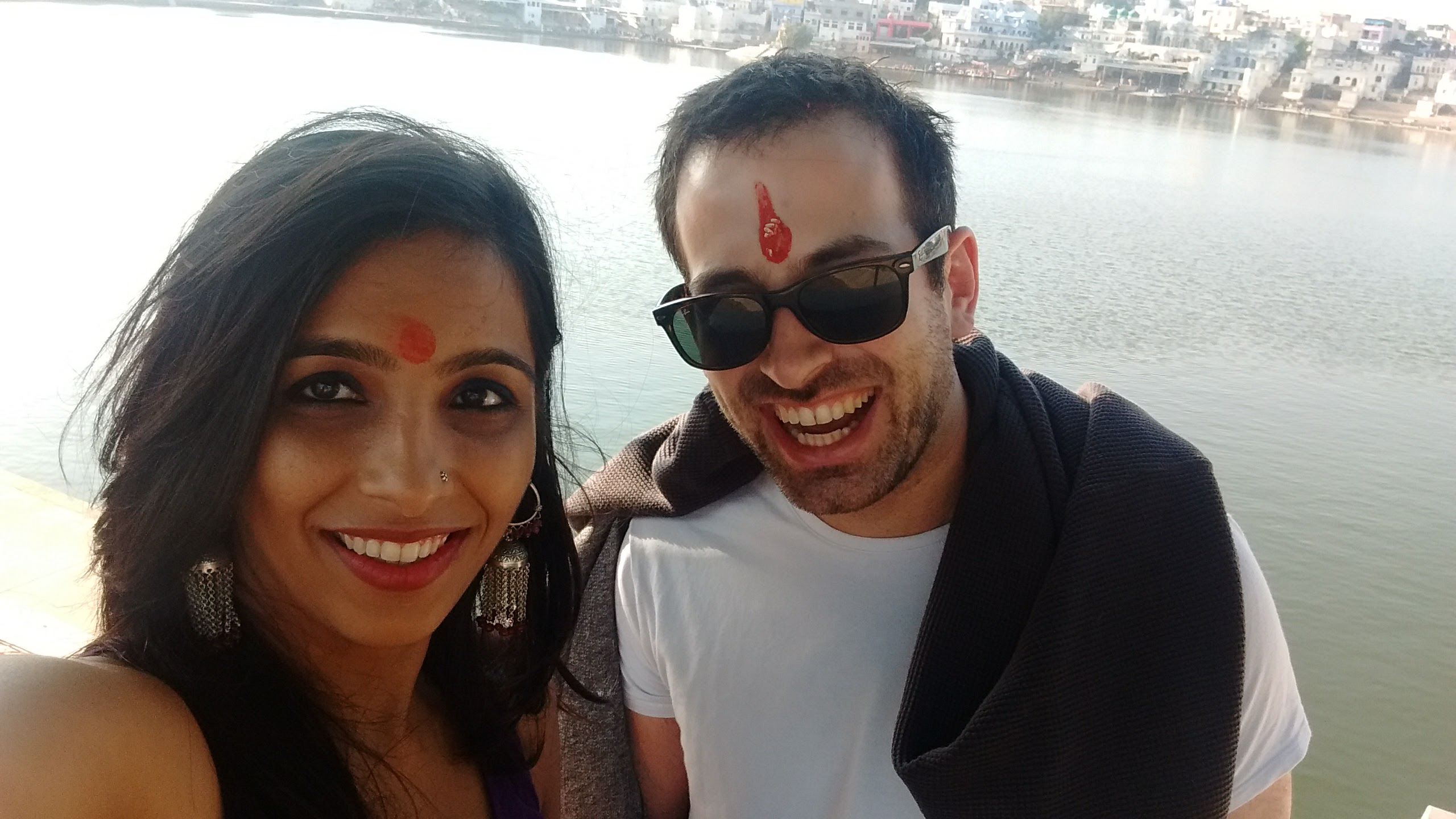
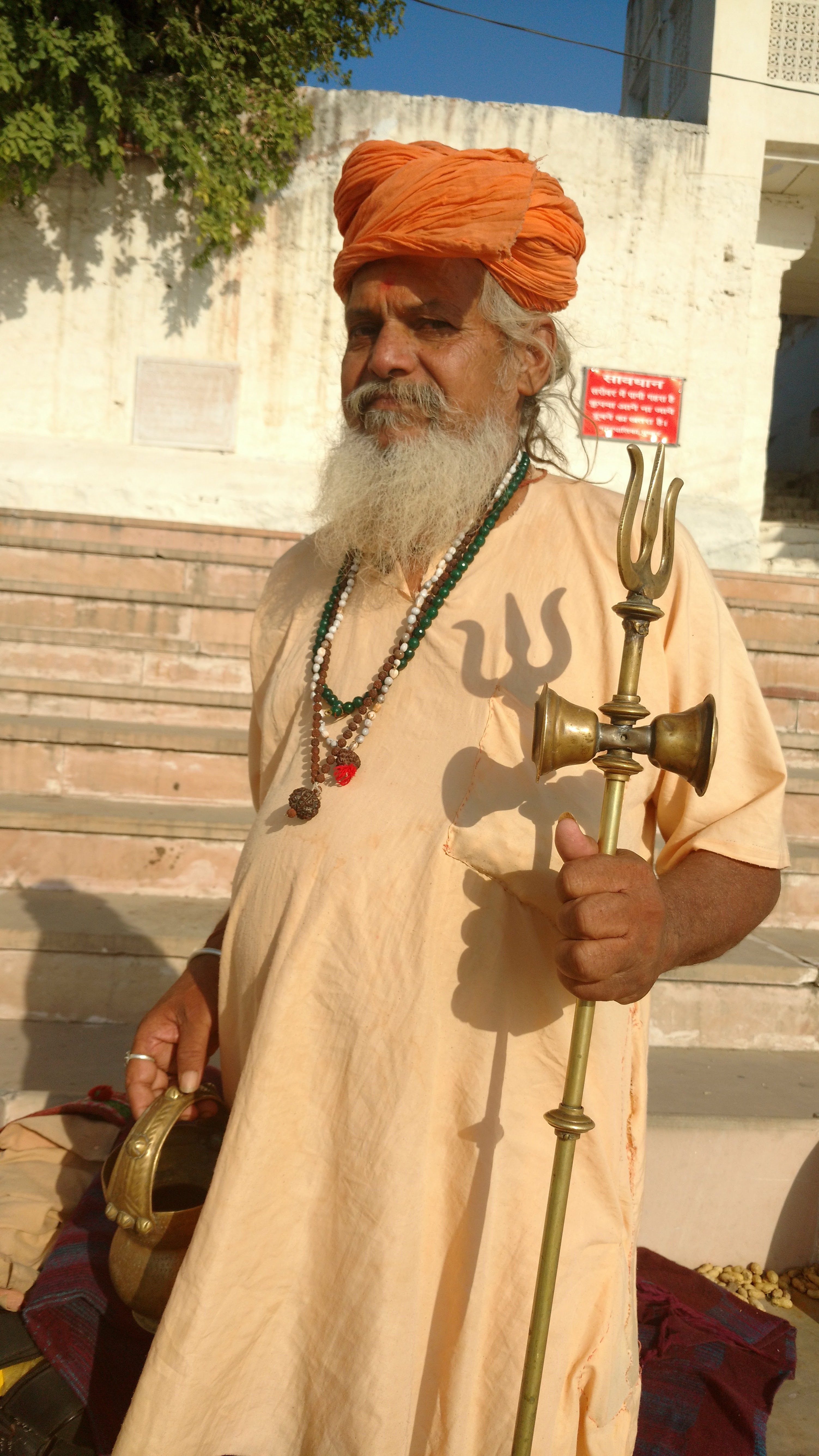
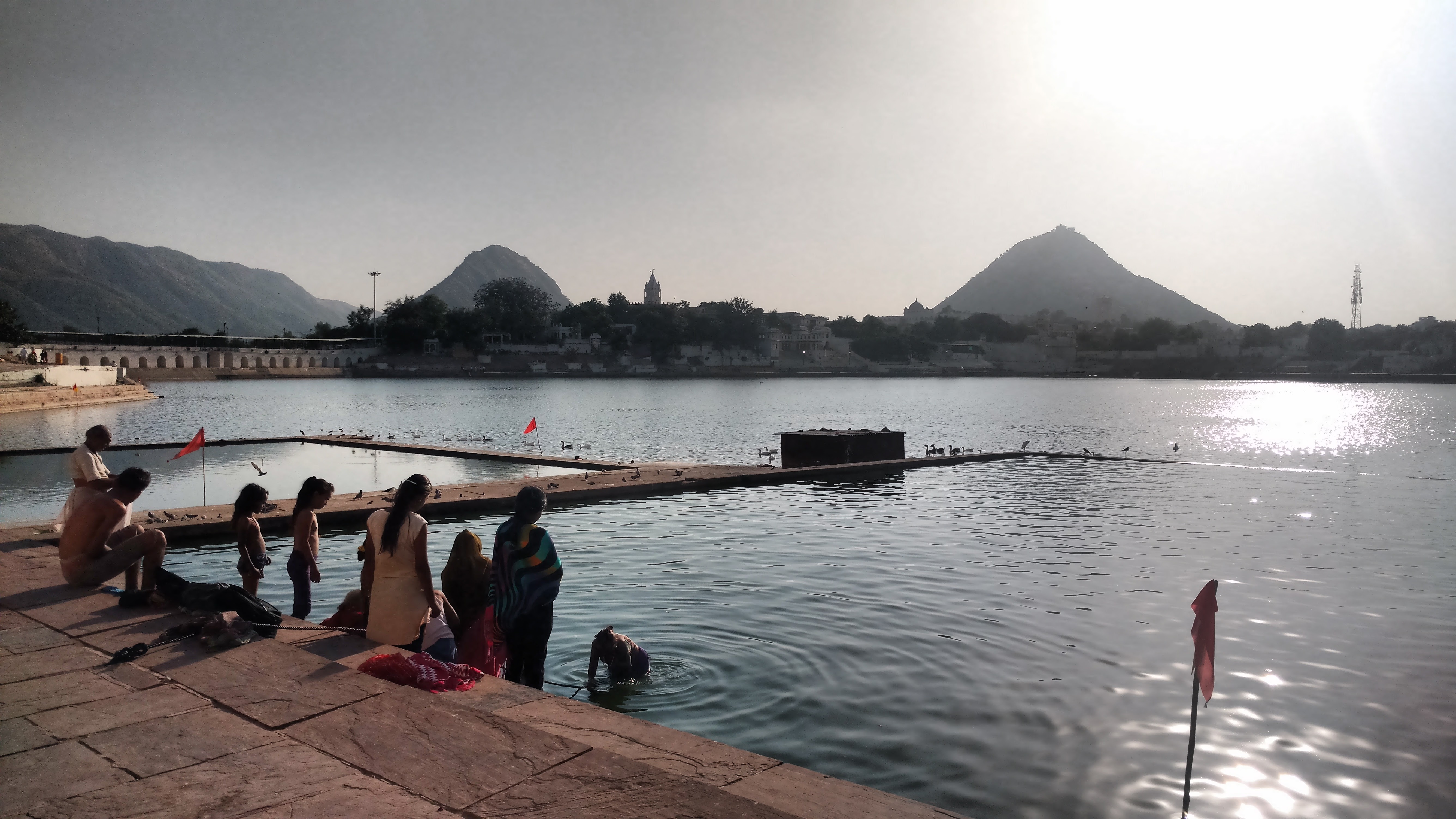
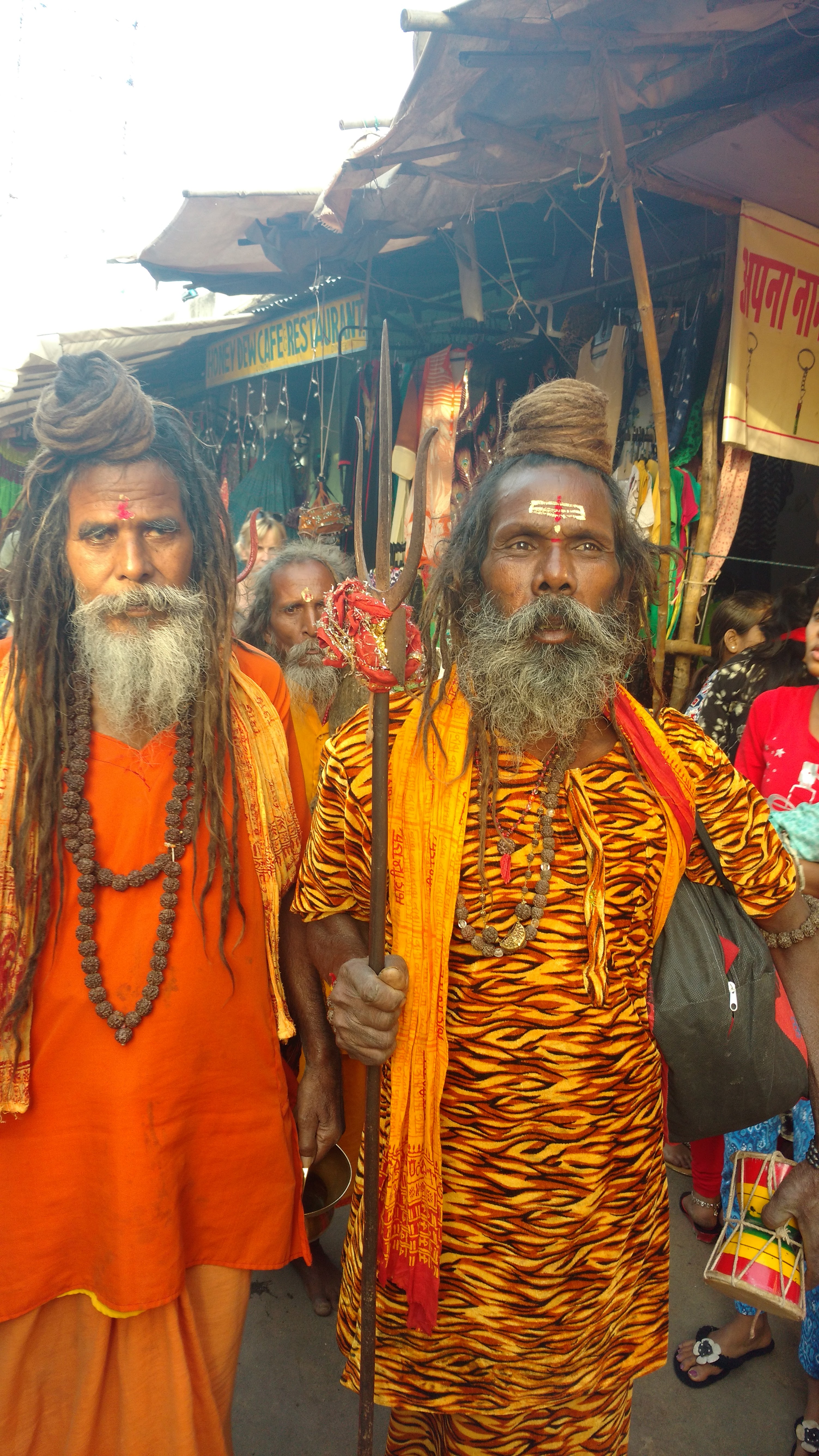
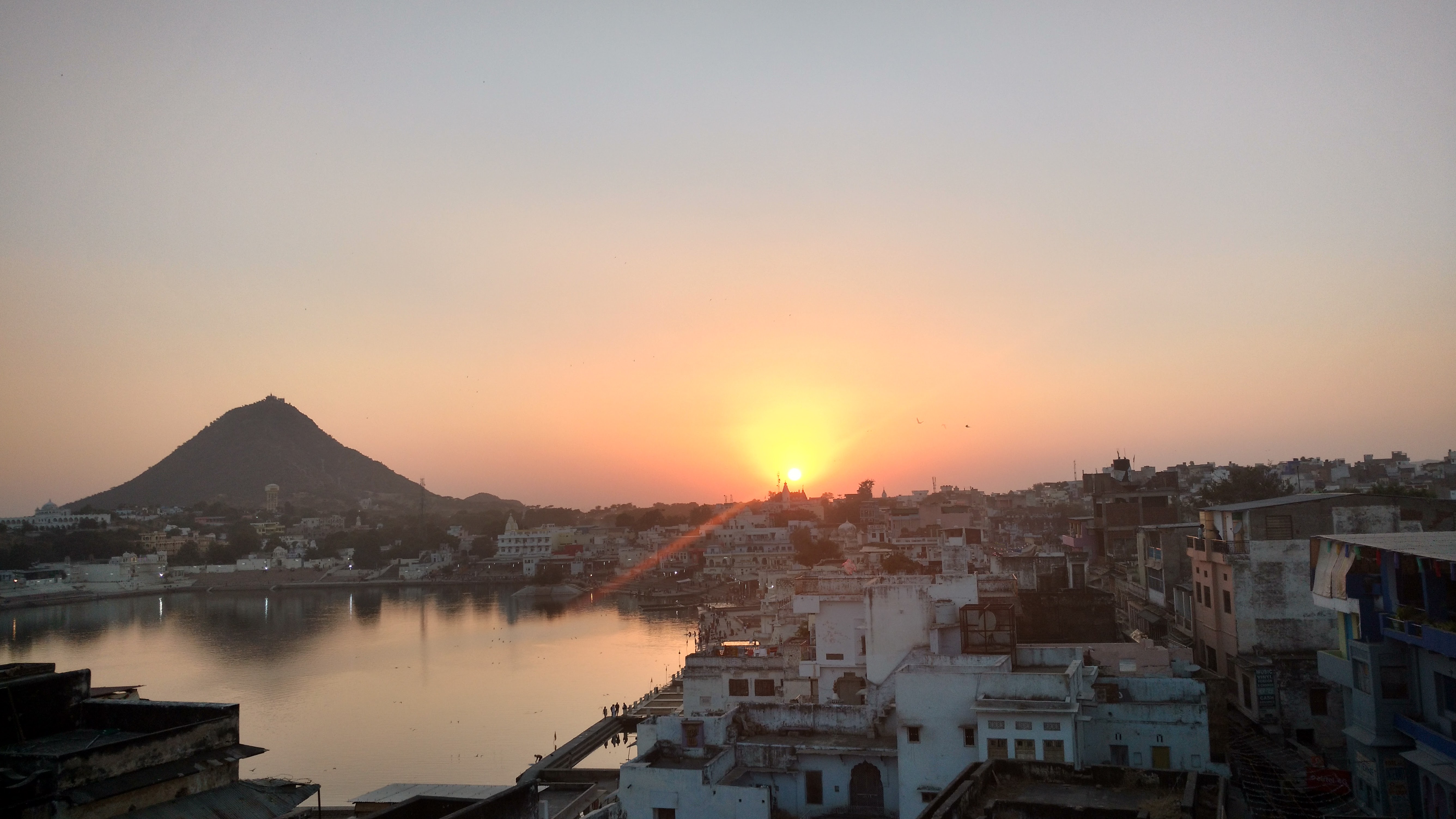
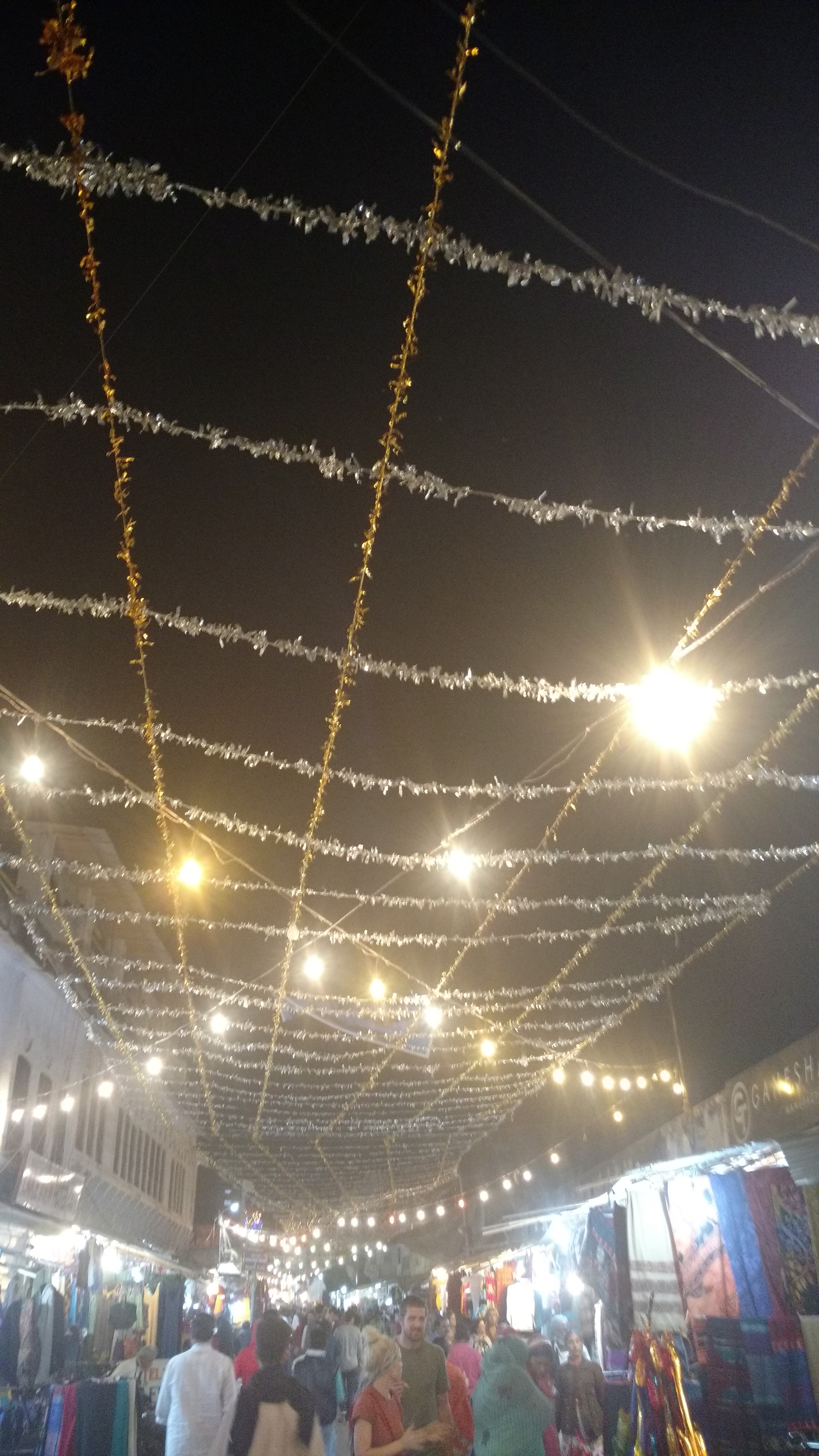
We checked out the famous lake with god men and babas around. Just walking around there was like a miracle. So invigorating and stimulating. The markets were bustling, but there was also a real calm. The calm wasn’t entirely healthy: demonetization had put a damper on things. There were fewer camel merchants and business in general was slower than usual.

You see things that you just don’t see here. I probably saw 100 things that day that all seemed unforgettable, and they merge together and now I feel the impression they made, even if the particulars are foggy. But going to rooftop cafes for a cold beer, some nice food, and incredible views in every direction was great.

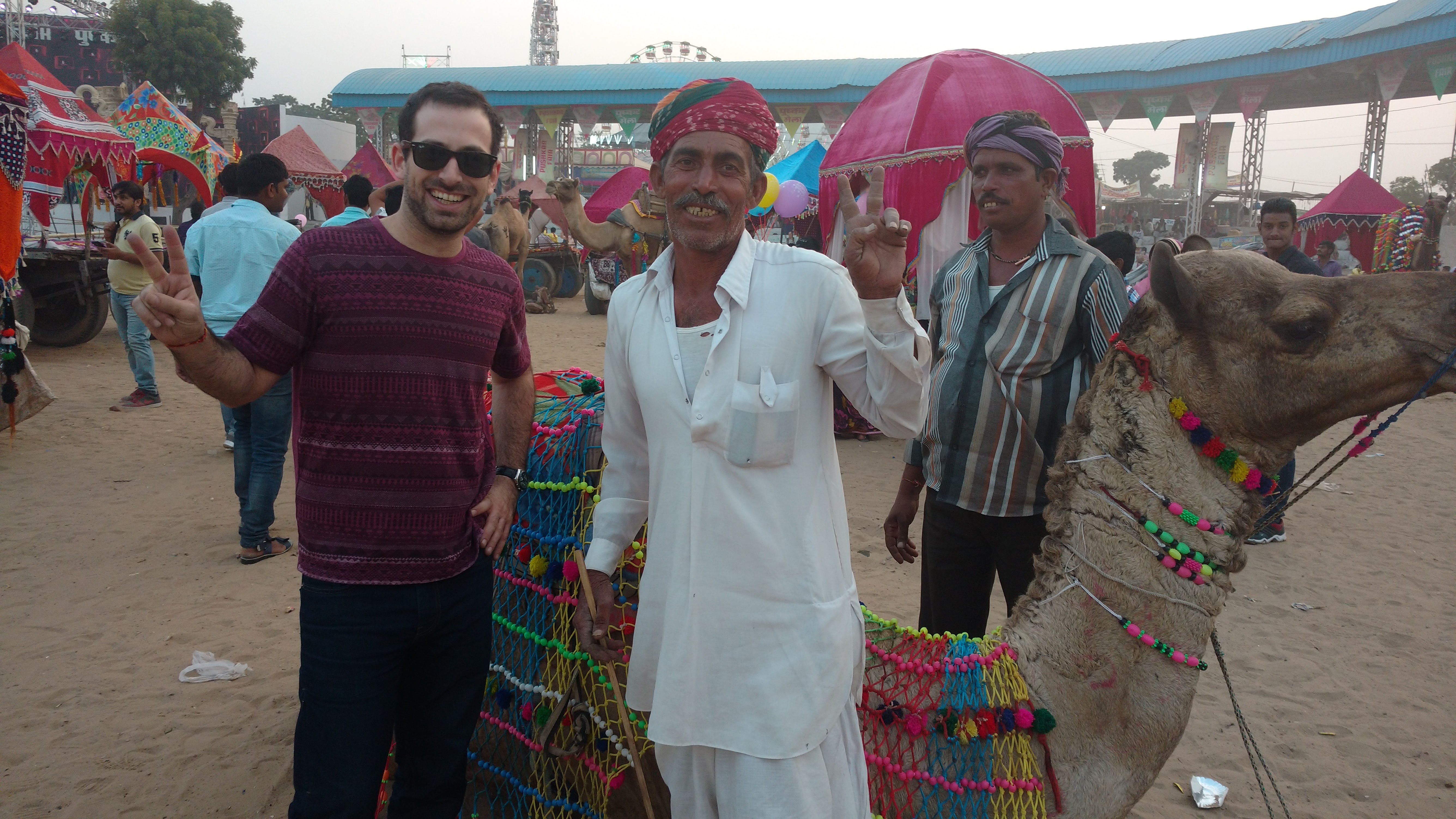
The next day we went on a brief camel ride through the nearby desert dunes. I had never been on a camel, and the clothing these camels wore was truly incredible. Vibrant and bold funky ass camels, cooler than that 90s rare gear copper! Gopika and I were having a really good time, just talking and stuff. If there was anywhere to get your mind off the rest of the world, it was here.

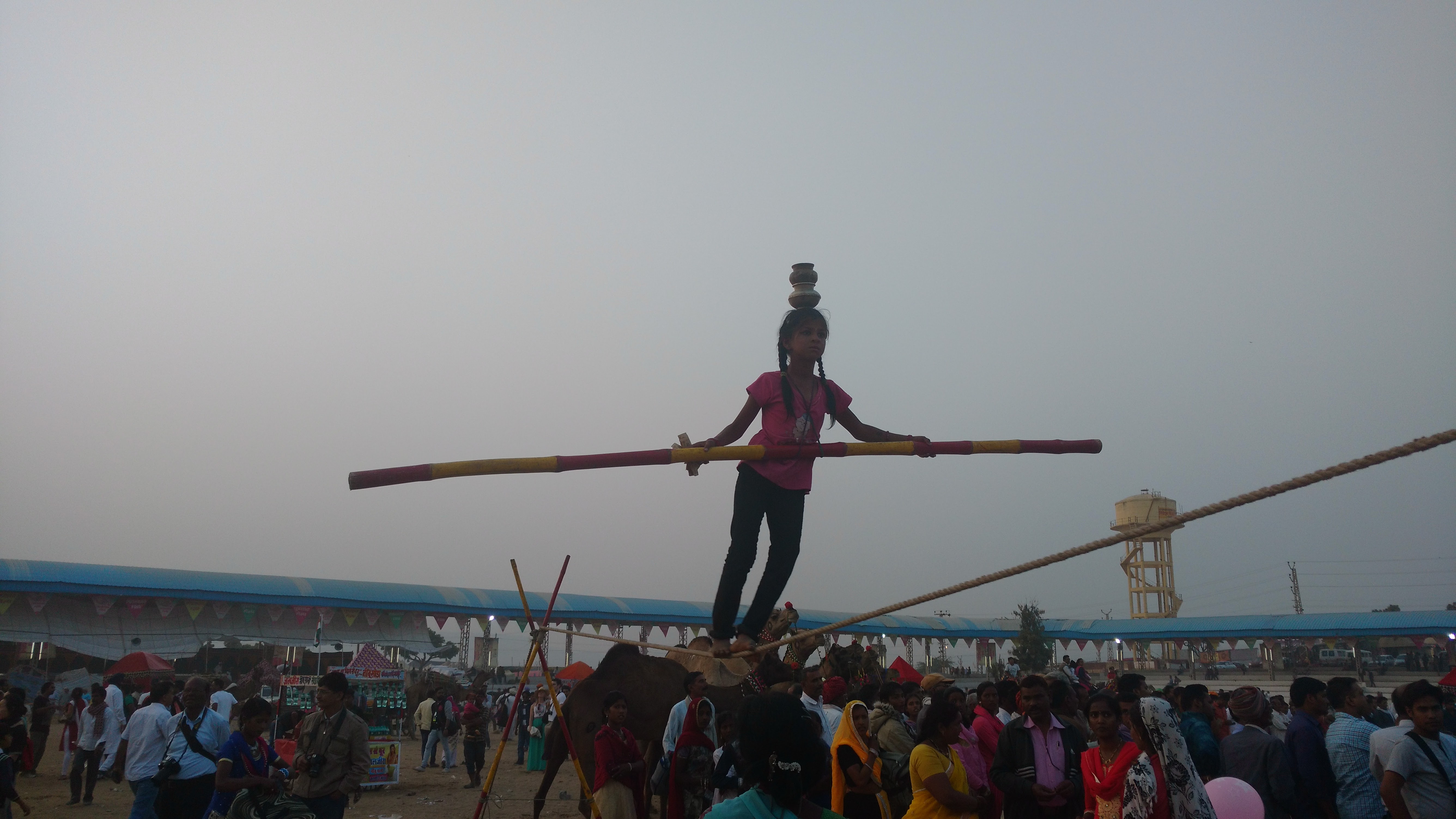
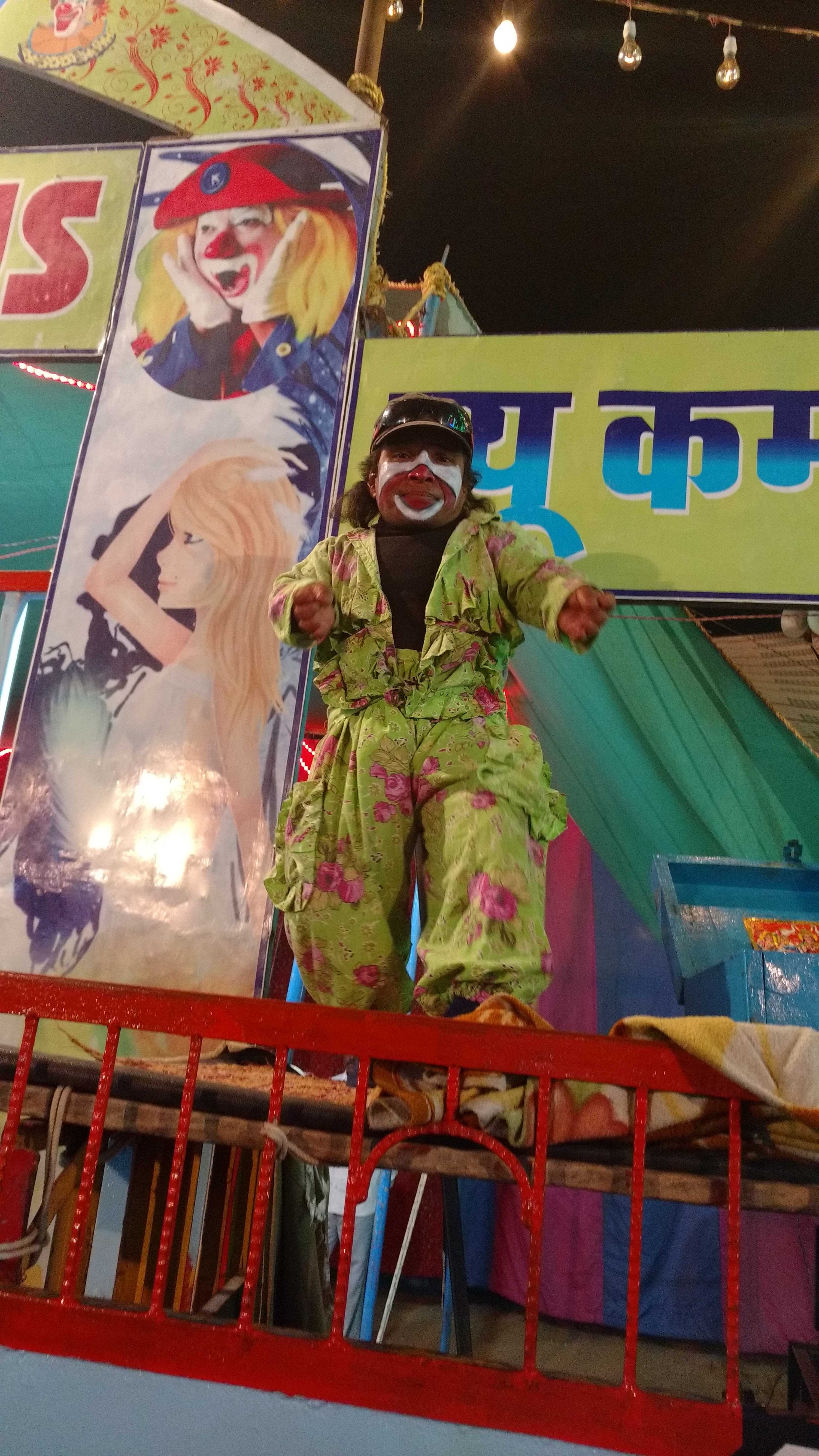
A carnival was in town with the Camel Fair. People selling wares, young girls tight-rope walking with bowls on their heads, that sort of thing. We went on a cool Ferris wheel. We smoked some hash and watched a really exuberant, short gentleman outside the circus tent dance and hype everybody up. Inside the tent was a sketchy, eyebrow raising performance.

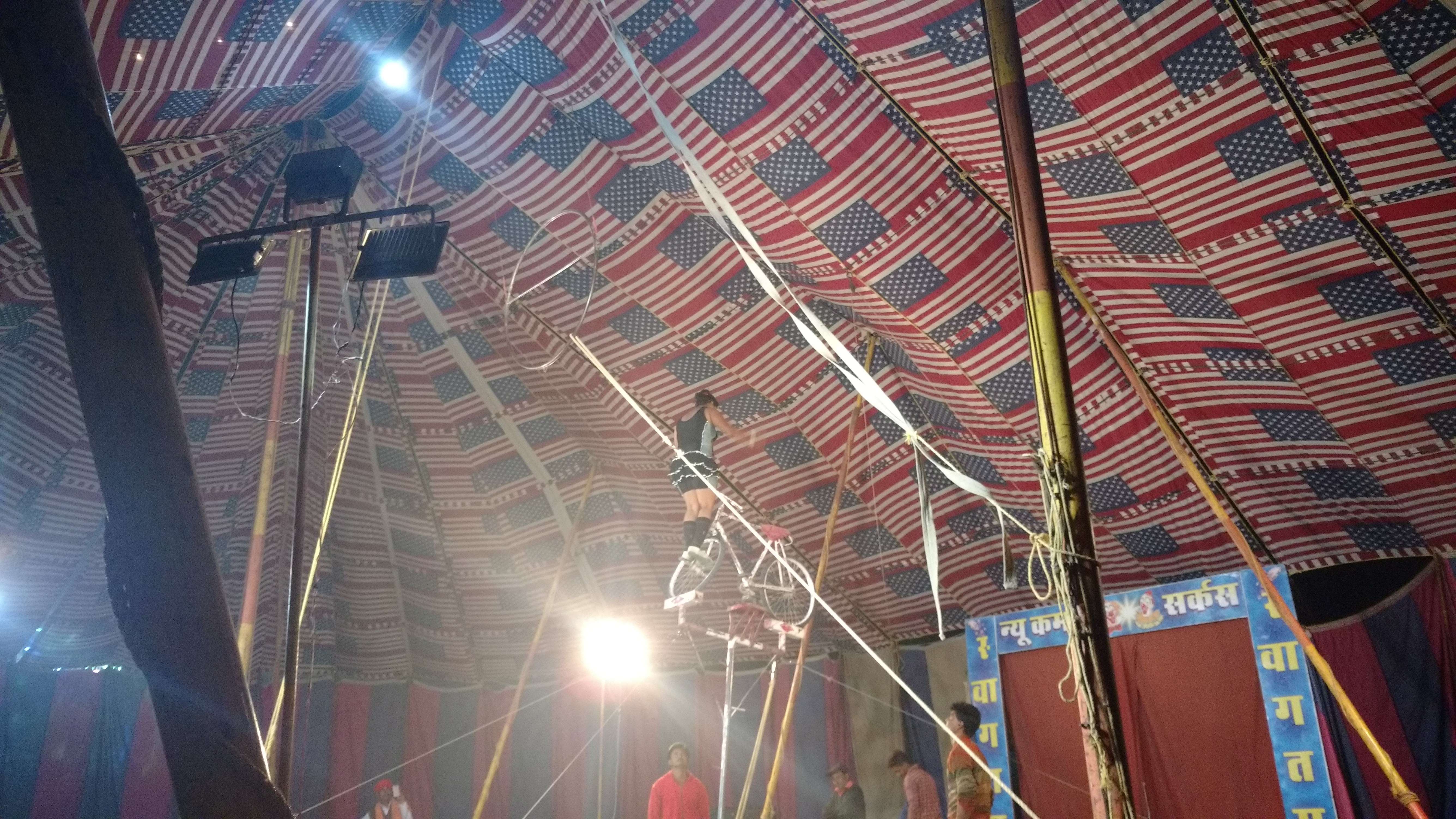
You know those old roller coasters that aren’t particularly big or fast, but they’re scary because they’re old and rickety and may collapse at any second? That was the vibe of these daredevil carnies. Juggling fire was fine, but they balanced on bikes high up on small supports and did other jaw-dropping stunts without a net.

The scariest thing was the finale, a man throwing knives at either side of a blind-folded woman’s face, into a wooden board behind her. That cool thing where the knives whoosh and spin and become embedded in their targets mostly didn’t happen. Instead they hit with a clunk and fell to the floor. It didn’t inspire confidence and I was so relieved for that woman when it was over.

In a metaphor extremely on the nose, that threw in my face what I tried to forget, the roof of this crazy circus comprised entirely of upside down US flags. Honestly, what are the odds? The Pushkar Camel Fair circus may have been a bit dubious here and there, but it was America that was upside down.

That day in the market we had ran into a couple friends of mine from WION, Nagen and Ashish. Small world! They weren’t just work colleagues, they were with me in the early days before the station launched, and we’d go for beers together and hang outside work. They made documentaries and TV programs for WION. They both loved to laugh and had a good artistic and political bent. Great people to talk to and it was really nice to see them. It’s funny to think that if I hadn’t come all that way with Gopika, I still might not’ve been alone in the end.

Next day upon leaving, the hotel POS terminal was down. I tried to wire money to pay for our room but couldn’t online bank through my phone. Nobody had cash, the story across the country. I explained the situation to the gentleman and promised I’d pay him when I returned to Delhi, when I had my laptop and bank login info. Thankfully, after a while, he trusted me and that’s what I did.

Sunday night, we took an overnight bus back to Delhi and I returned in time for my Monday afternoon shift without missing a beat. True, Trump was slated to be president and Indians across the country were up in arms about demonetization, but the acute, crushing doom the immediate aftermath of that night was somewhat softened. Thankfully, instead of overwhelming me, it’s slowly rotted my brain every day since for the last decade.

As for demonetization, the uproar from different segments of Indian society was in stark contrast to my station’s all but official position: WION released a shameful TV commercial praising demonetization so gushingly, it would have been an embarrassing thing for the government to release, never mind a news station that was supposed to report objectively.

But then again, Zee Media had an ATM machine inside the security gates that only people with a media pass could withdraw cash from. Once when it was empty, I lined up for cash at an ATM near the office, open to the public, and the picture was very different. I waited for maybe two or three hours, and when the guy finally came to load it up with money, the pushing was real. Nobody got crushed, it wasn’t a herd, but it couldn’t have been easy for women, seniors, or infirm people.

Demonetization continued to ravage India and my privilege didn’t end. It got comically worse.

Second Escape: Himachal Pradesh–Malana, Challal, Kesol

The next week or so, I went on another trip with three good friends (Kandarp, Laden, Varnika, miss you all!) to the breathtaking Parvati Valley in Himachal Pradesh. To Kesol, Challal, and Malana, the latter a small remote village where the inhabitants believe they descend from Alexander the Great and don’t consider themselves Indians, really. They avoid touching any outsider, not even to exchange money, whether from India or anywhere else, not just with white people.

I was told their justice system works as follows: if two people have a dispute, the judge will instruct them to each poison their goat, and whoever’s dies first is in the wrong. To me, this is a smart way of avoiding litigation altogether; it’s a coin toss and your goat will die regardless, so figure it out on your own and don’t burden the courts.

Malana also just so happens to be home to world-class hash. I was told the Italian mafia imports it. For a time, Malana Cream was Amsterdam’s most expensive hash. Children rub the plants in “rubbing season” because their hands are smooth and don’t have lines or creases yet, which isn’t an excuse for child labour, I’m just reporting how it goes there.

Before departing for that trip, I went to a bank in Connaught Place to get more cash than the 2,000 rupee limit ATMs could dispense. The lineup was enormous and wasn’t moving. I had a bus to catch and after a couple hours of waiting I doubted I’d make it. People there needed cash for real problems. This was mine.

Somehow, a bank manager saw me waiting, literally the only white person in line. He asked if I had an ICICI account. I said yes, then he personally escorted me ahead of everybody and two minutes later I left the bank with all the cash I needed. I walked past people sheepishly, apology written all over my face. I didn’t ask for this treatment, but I wasn’t going to say no. Would you have, in my position? And the strange thing was, nobody was remotely upset: The same attitude that told the manager to let me skip the line also made everybody waiting there resigned to it. At the very least, they didn’t seem like they wanted to kill me.

The overnight bus drops you off at 7am for a two or three hour trek up a mountain to Malana. The Rockies and the Alps are pebbles compared to the Himalayas. On a mountain path I saw a sheppard guide maybe 200 of the wildest animals I’ve ever seen, no two coats or sets of horns alike. That trip was truly wonderful too.

Demonetization didn’t accomplish any of its stated aims, which, again, kept changing weekly. There were a few reports of people who misunderstood the news when it broke, and, fearing their life savings suddenly vanished, they killed themselves.

I don’t mean to make light of the enormous problems demonetization needlessly caused. I’m just contrasting my experience with other people’s as much to shine a light on what they went through as what I did. The real point is the discrepency. I suspect the people who pushed demonetization had an even easier time than I did. The thing about privilege is that I never had to lay my claim to it. It was just there, waiting and ready. If you need to assert it, you don’t have it.

I still think demonetization was all a sham and a cover to shock a coveted cash-reliant market at gunpoint into transitioning to a digital economy and digital banking. Whatever benefits from online banking were offset by the many drawbacks and the acute crises people suffered. There were major protests and lawsuits. But soon enough, I’d see vegetable wallahs in Delhi with signs on their carts advertising that they accepted Paytm. Indians are an incredibly resourceful, adaptable, ingenious people.

10 years later, it’s Trump’s second term and he’s threatening to invade Canada, waging economic warfare against us and traditional Western allies, and even deploying his secret police force to attack Americans in Democratic cities. While life goes on and all things do pass, eventually, you need to face reality and can’t keep running away to the desert or the mountains forever.

Twitter

Follow @JDhalperin
Tweet

Enter your email address to follow this blog and receive notifications of new posts by email.

Join 1,022 other subscribers

Essential sites

  • Grateful Dead Chords/Tabs
  • Neil Young Chords/Tabs

My Writing

  • Huffington Post
  • Maclean's
  • Music Writing
  • The Star
  • the Walrus Laughs
  • Toronto Review of Books
  • Toronto Standard
  • World Is One News

Topics

  • Comedy (18)
  • Literature (13)
  • Music (1)
  • Politics (29)
  • Sports (16)
  • Statements (36)
  • Uncategorized (44)

Create a free website or blog at WordPress.com.

Privacy & Cookies: This site uses cookies. By continuing to use this website, you agree to their use.
To find out more, including how to control cookies, see here: Cookie Policy
  • Subscribe Subscribed
    • Jeff Halperin
    • Join 52 other subscribers
    • Already have a WordPress.com account? Log in now.
    • Jeff Halperin
    • Subscribe Subscribed
    • Sign up
    • Log in
    • Report this content
    • View site in Reader
    • Manage subscriptions
    • Collapse this bar

Loading Comments...